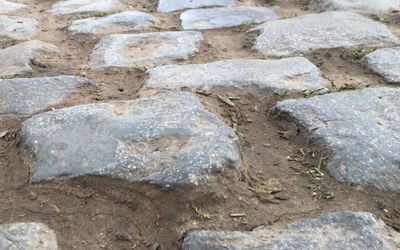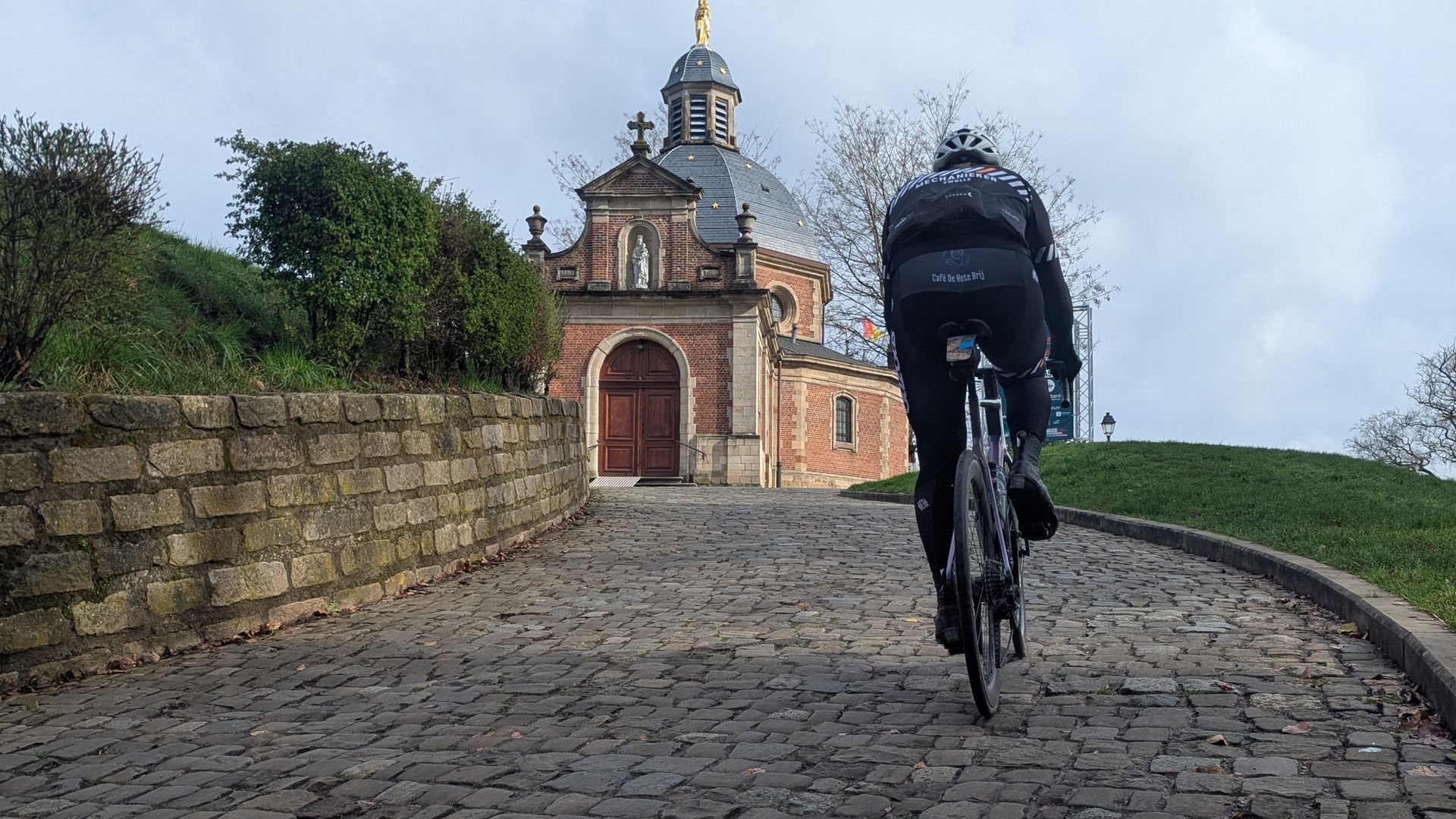
One ray of sun at the end of February and the start of the Classics Season was all it took. My friend Johan and I got excited, took a Friday off, and planned a short trip to Flanders. The goal: ride as many of the famous Flemish cobbled climbs as we could fit into two days, and be home by Saturday evening.
On the drive to Belgium it poured the entire way. We questioned why we got excited to ride Flanders in early March. But when we pulled into Oudenaarde the sky cleared, and by the time we had our bikes ready, we had a window of dry weather.
Day One: The Tour of Flanders Blue Loop
We rolled out along the cycling path next to the Scheldt river, a flat and easy warm-up toward Kluisbergen. Then we turned left and hit the Oude Kwaremont, our first proper cobbled climb of the trip.
It was rough in places but manageable once we passed the town of Kwaremont. The preparations for the Flanders Classics were in full swing, so we had to weave around construction work and barriers. A good reminder that we were riding on hallowed ground.
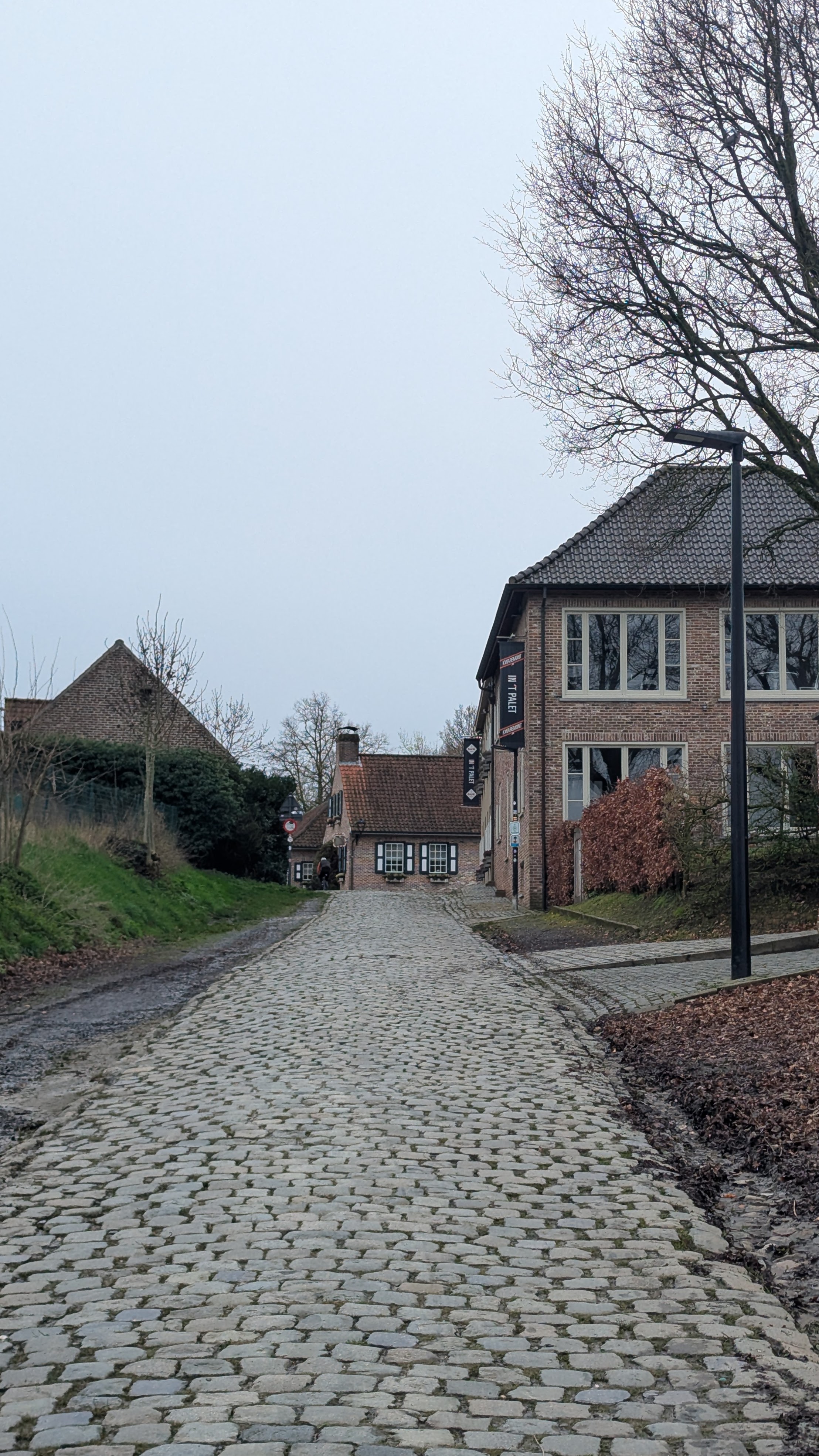
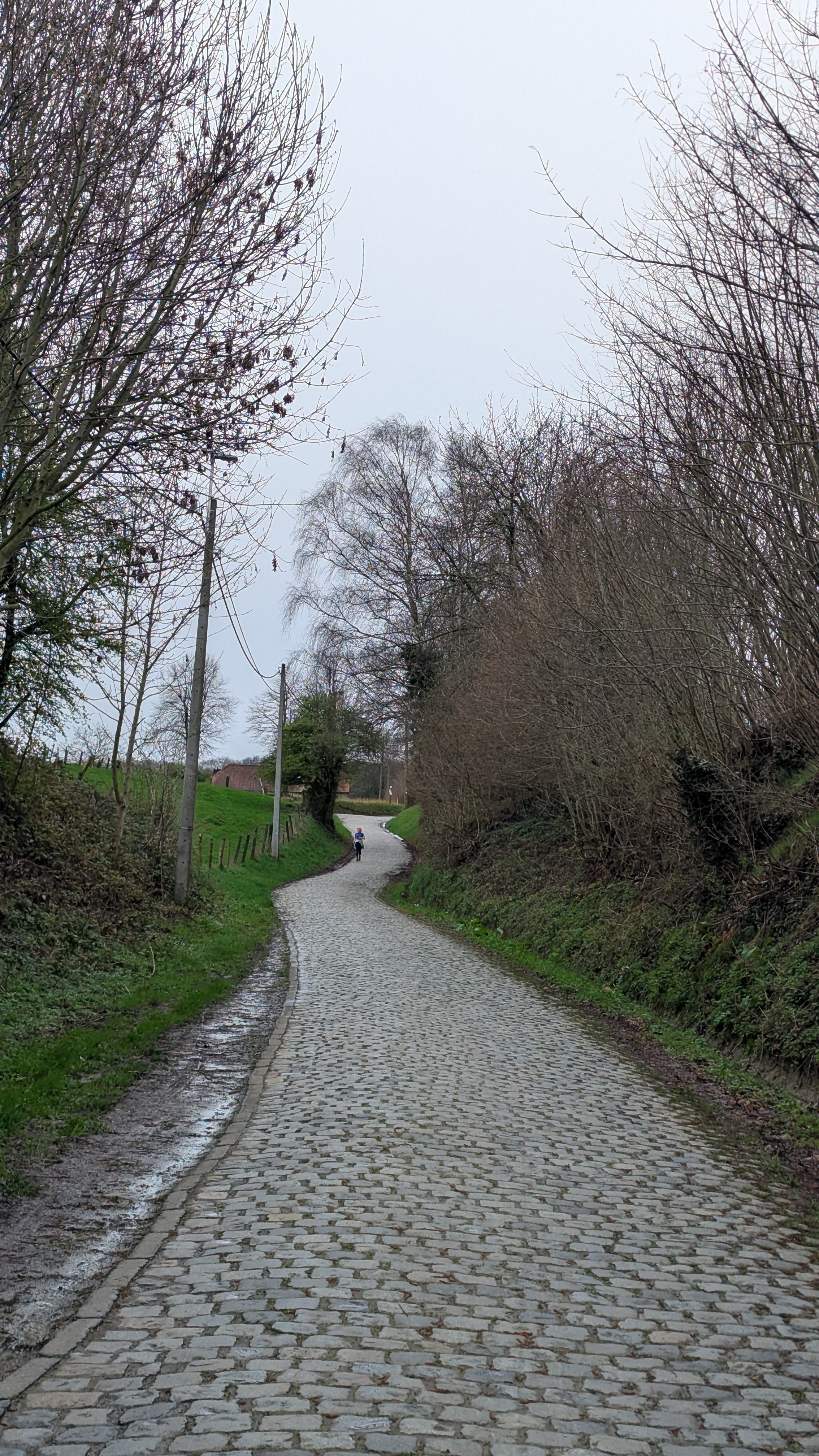
After a quick visit to the iconic Ronde van Vlaanderen street, we tackled the Paterberg. Shorter than the Kwaremont but noticeably steeper. Then came the Koppenberg.
We knew our chances of walking were high given the rain of the previous hours. In the wooded part of the climb the wet cobbles turned into a slippery surface. Our rear wheels started slipping and we had no choice but to clip out and walk. For a good hundred meters we had to walk before the climb flattened a bit and we could attempt to get back on our bikes. That walk destroyed my cleats, and I'd pay the price for the rest of the trip.
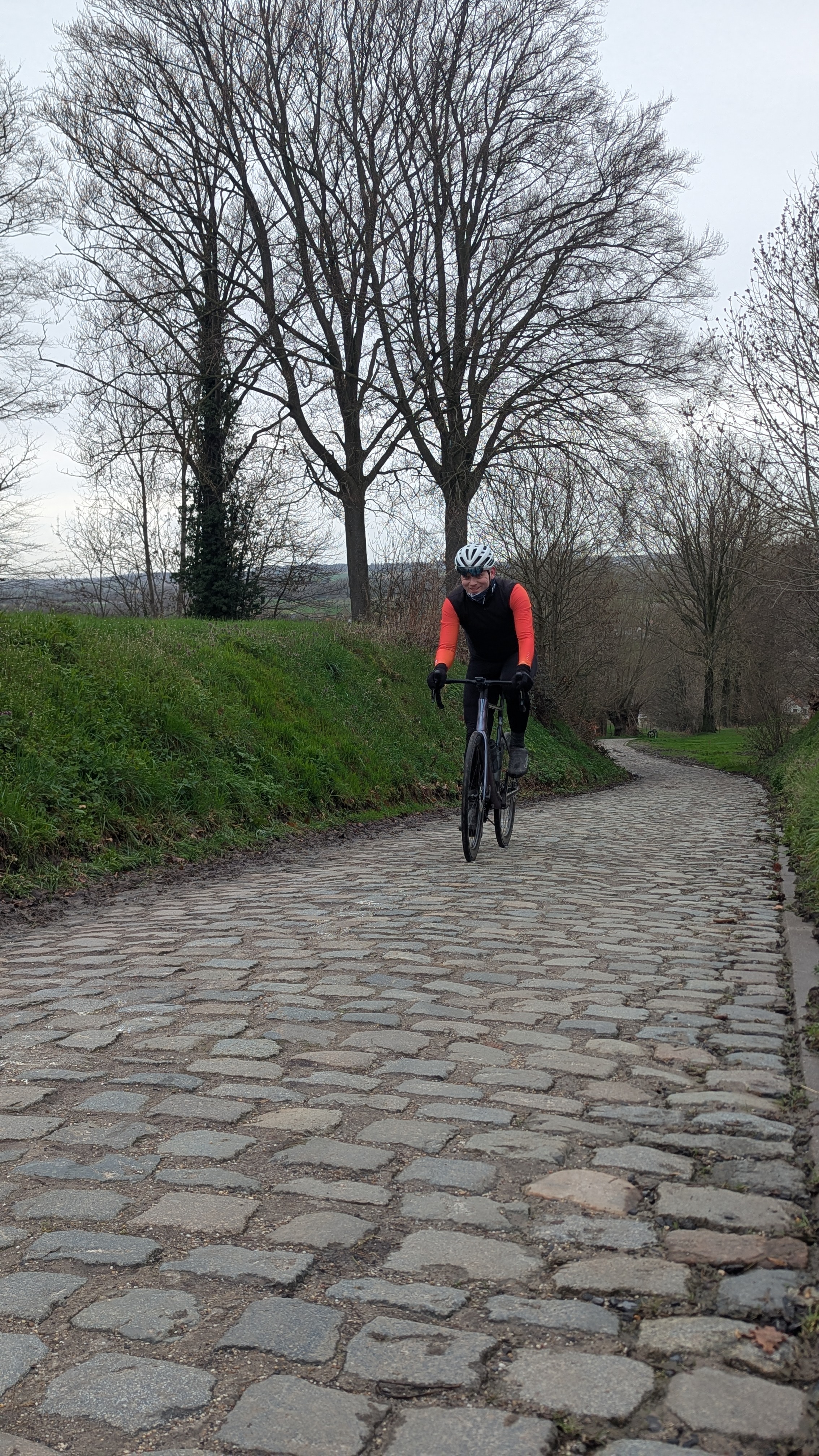
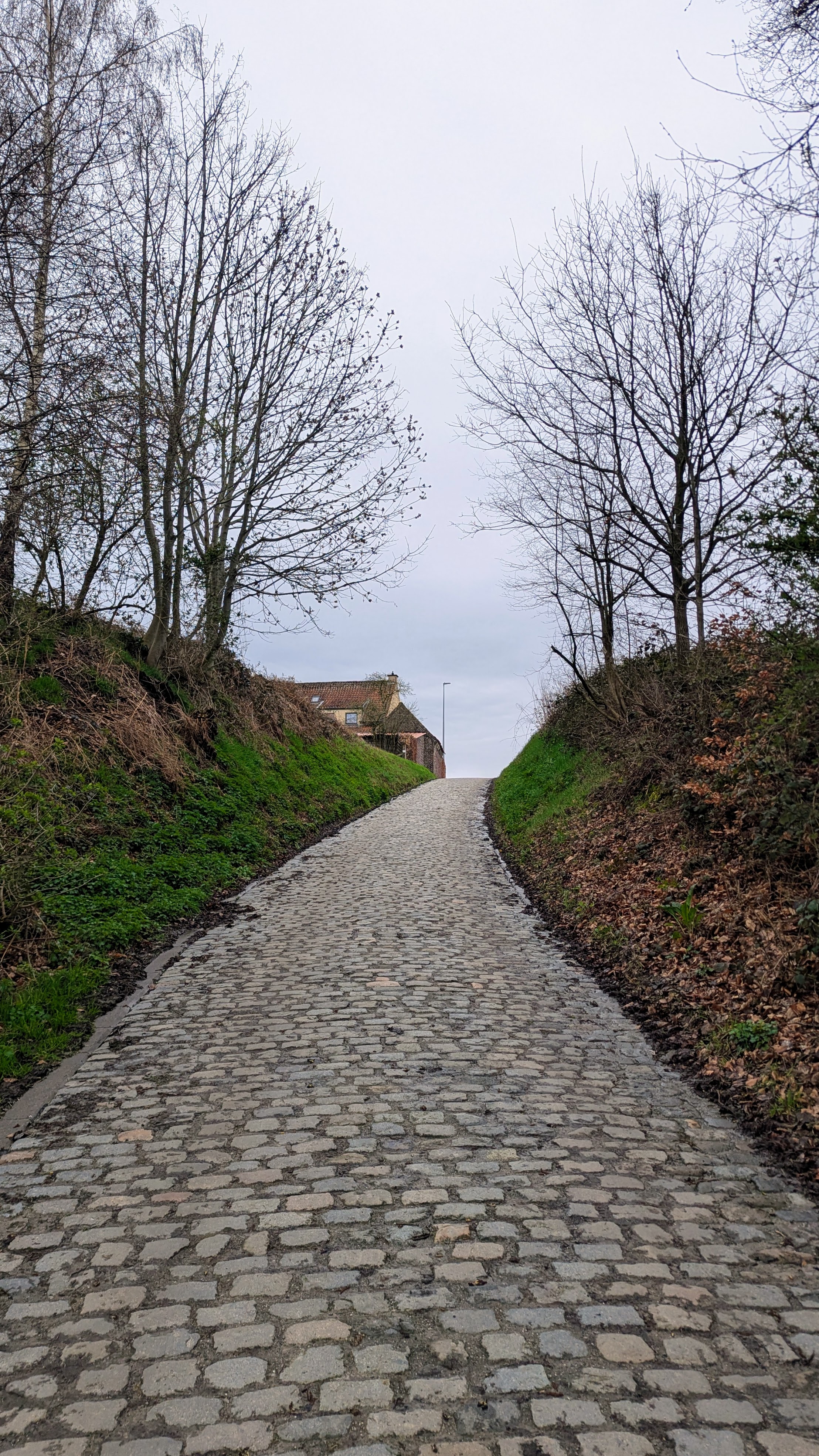
The route continued through the Mariaborrestraat (currently under renovation, so we had to go off-road in some sections) and onto the Taaienberg, famously Tom Boonen's favourite climb to launch an attack. Then the Muziekberg (what a name!), followed by a fast descent of the Kanarieberg (another iconic name), a climb we saved for the next day.
Into Ronse and Beyond
From there we rolled into Ronse for the Oude Kruisberg. This is a climb that is easy to underestimate. It starts in the city centre and you think "is this it?" Then the cobbles hit and you instantly regret that thought.
We crossed the Hotondberg and dipped briefly into Wallonia for a loop through the countryside before hitting the backside of the Kruisberg. On the ascent the rain started again and our window of good weather was finished.
On the descent, we noticed bike shop “Jowan” and headed inside to see if they could fix Johan’s shifted derailleur. While we roamed the shop they quickly fixed the bike on the spot, free of charge. That's the kind of service that makes you love this region.
The final stretch back to Oudenaarde was wet and windy, but a strong tailwind pushed us home fast. It was tempting to shortcut along the canal, but we stuck to the route and finished the full loop.
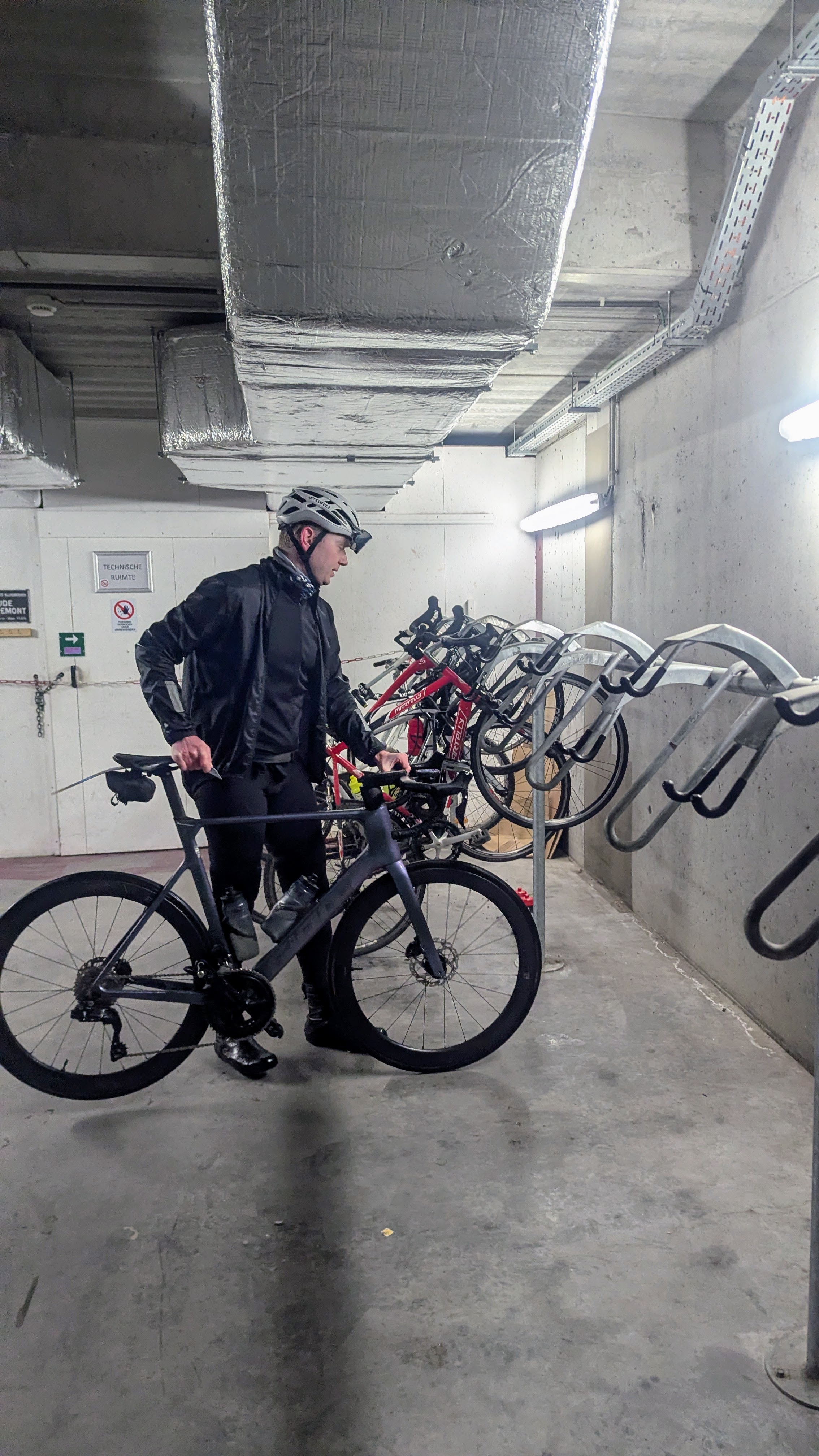
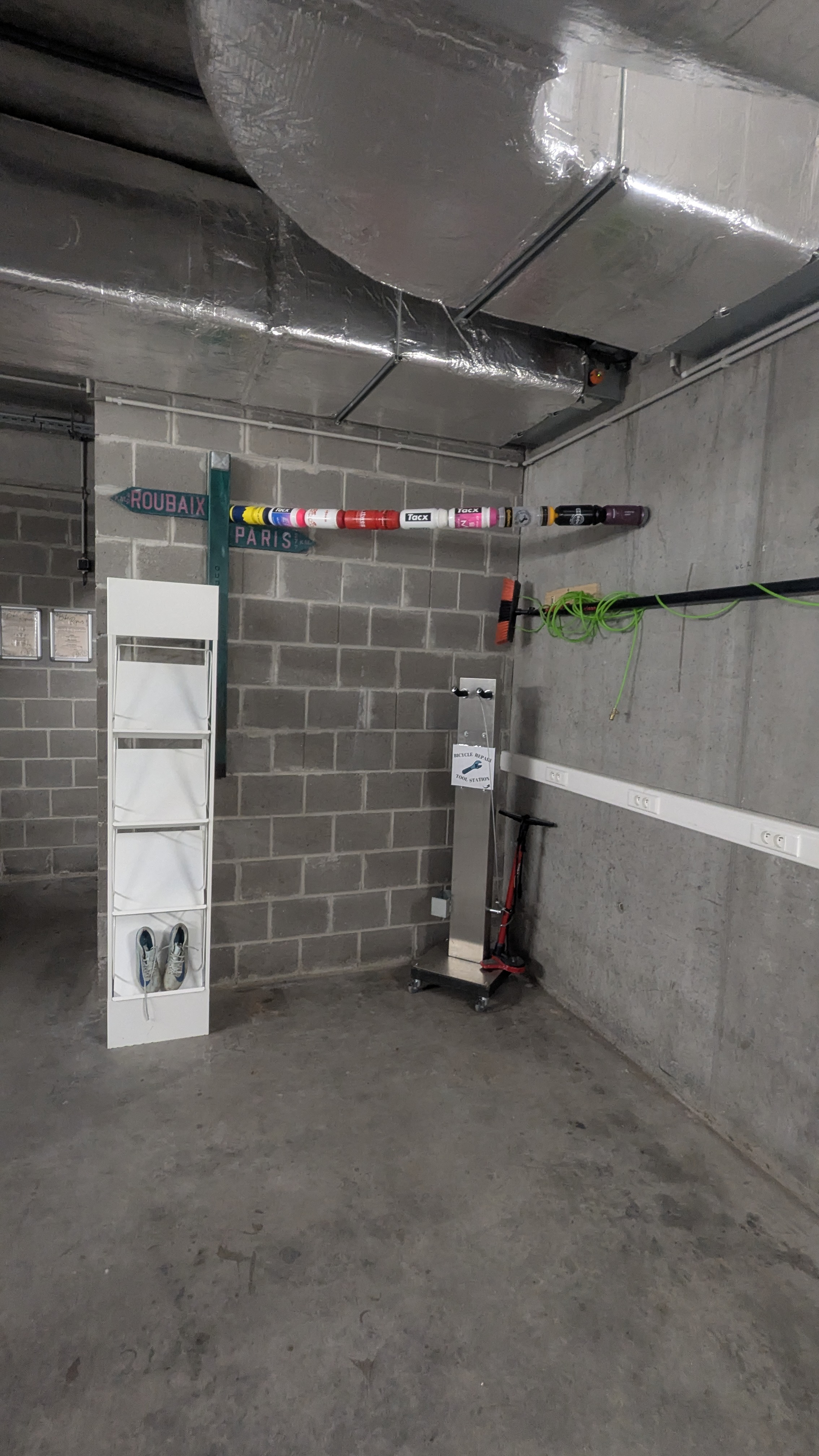
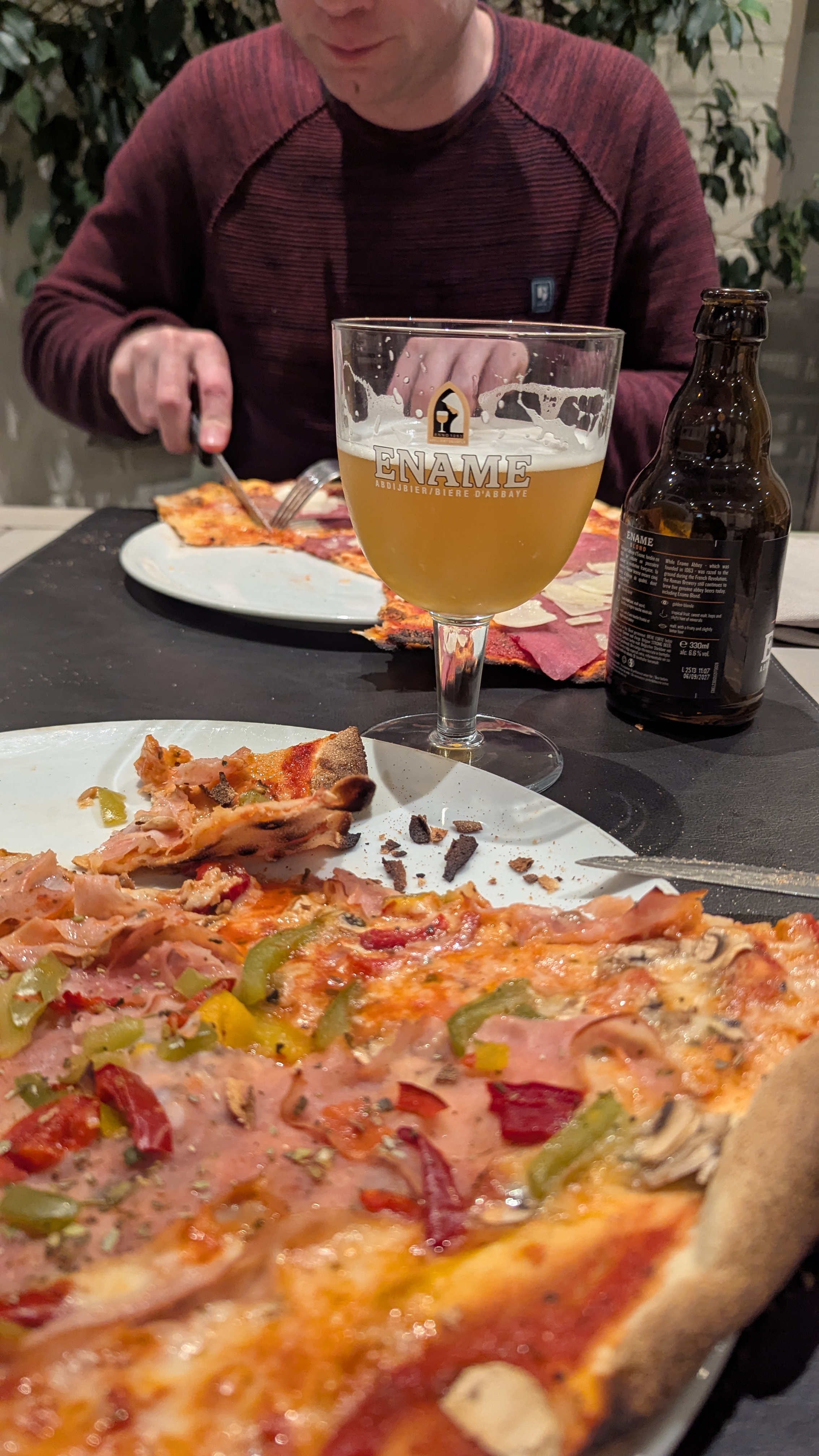
The reward? Our hotel had a dedicated bike room, which felt like pure luxury at that point. We showered, found a great Italian place nearby, and finished the day with a big pizza and a cold local beer.
Want to ride the Flanders Blue loop yourself, see the route
Day Two: Our Own Hell of Flanders
We woke up early, knowing we needed to be on the road home by midday. We planned a 90km loop, a variation on the Hell of Flanders route, taking us east through the Zwalmstreek toward Geraardsbergen.
The east side of Oudenaarde has a completely different character. More twists, more constant up and down, and quite disorienting at times. You’ll find lesser known climbs like Leberg, Pottenberg, and Rekelberg. After the first 30 kilometers it already felt like we had been riding for at least 2 hours.
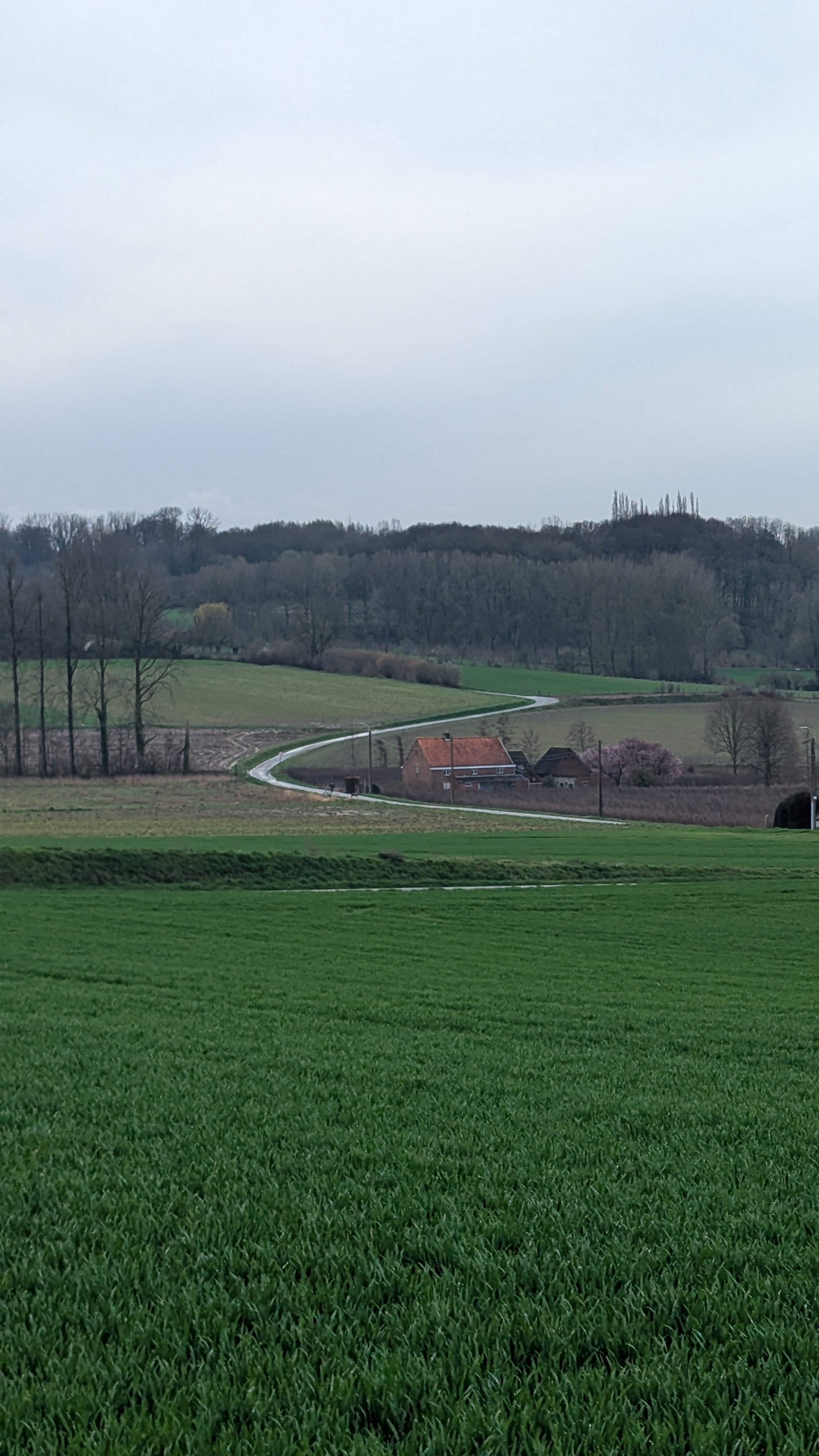
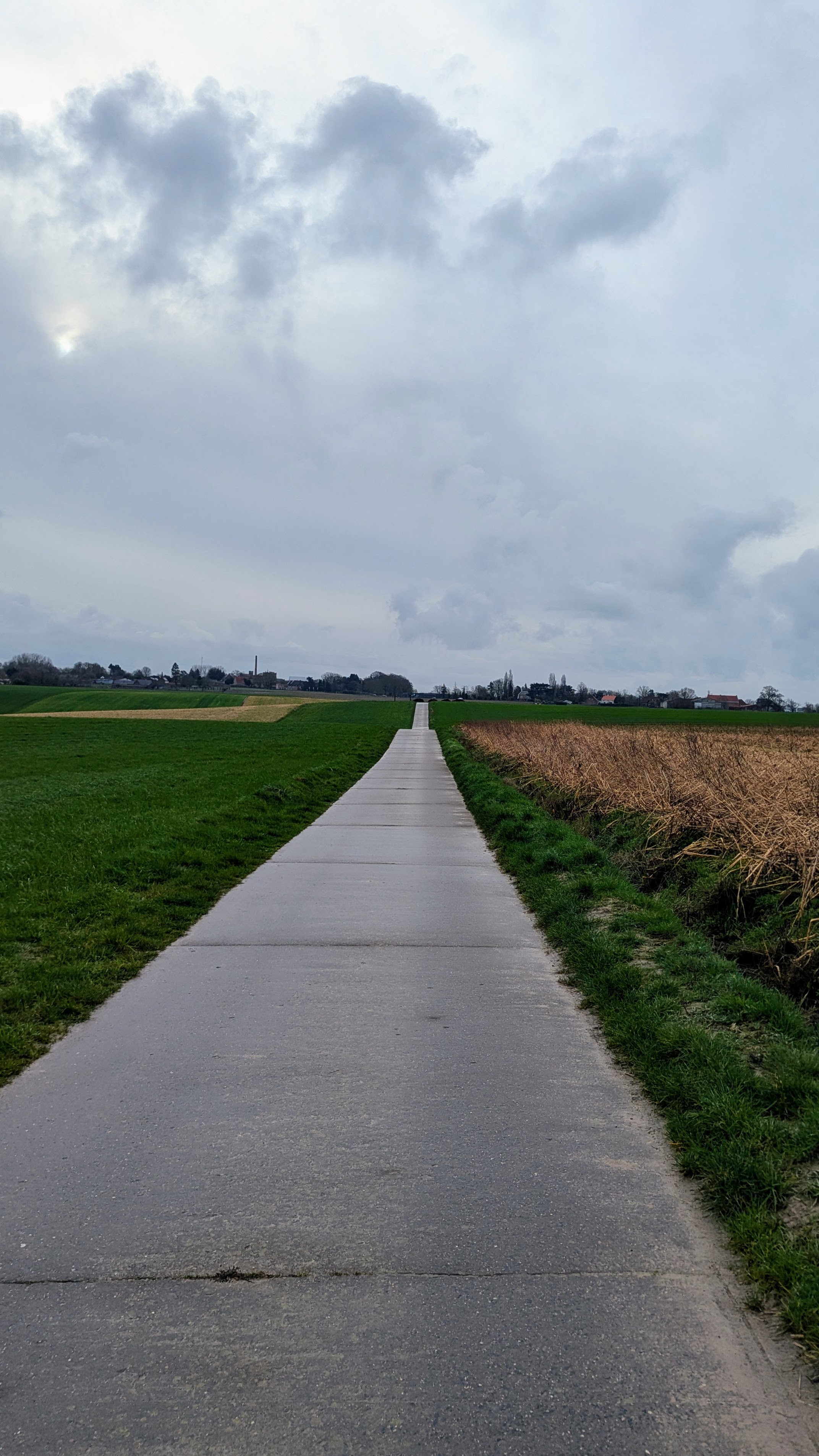
Each climb was followed by a quick descent on narrow farm roads through small hamlets. On each cobbled section I could feel my wrecked cleats giving way. My shoe popped out of the pedal every few minutes. Not ideal when you need to put down power on rough stones.
The Haaghoek and the Muur
The route took us down Haaghoek, one of the rare cobbled descents in this part of the region, with a short uphill section halfway through that forces you to carry speed or grind to a halt, which is easier said than done with a half broken cleat. I was performing a frantic balancing act: trying to pedal hard enough to keep my momentum, while being careful not to let my left shoe pop out of the pedal.
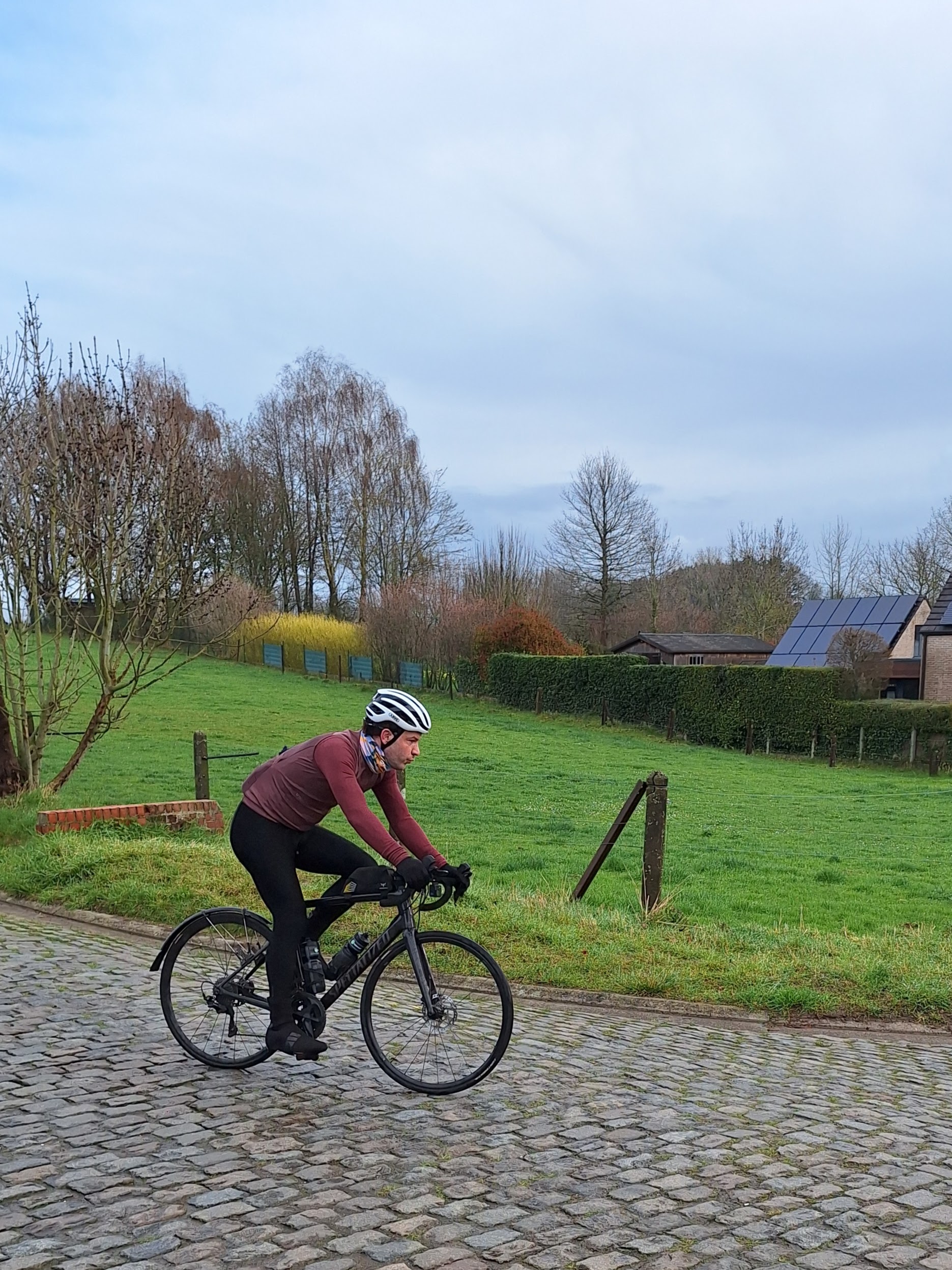
The trick to riding cobbles is to loosen your grip on the bars and stay off the brakes. You have to let the bike find its own line. It felt a bit like being on a rollercoaster, adding a dimension to the ride you don’t get on smooth tarmac.
Halfway through the ride we entered Geraardsbergen. We had planned to grab coffee before tackling the famous Muur, but most of the cafes were still closed. So we hit the climb without our coffee fix.
The Muur surprised us. It feels shorter than it looks on TV, partly because the climb starts right in the heart of town, long before you realise you're already on it. The gradient builds gradually as you ride between the houses.
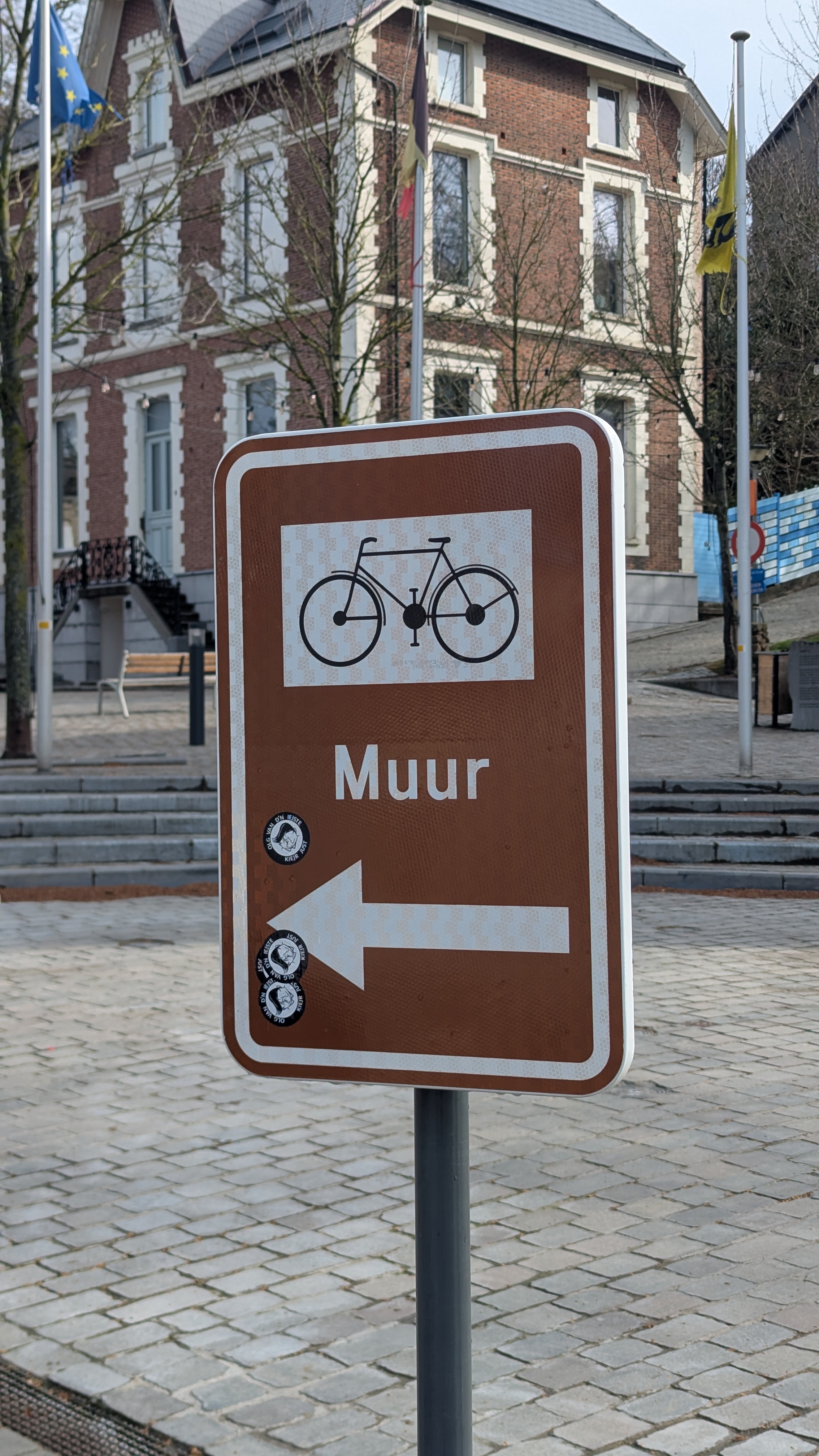
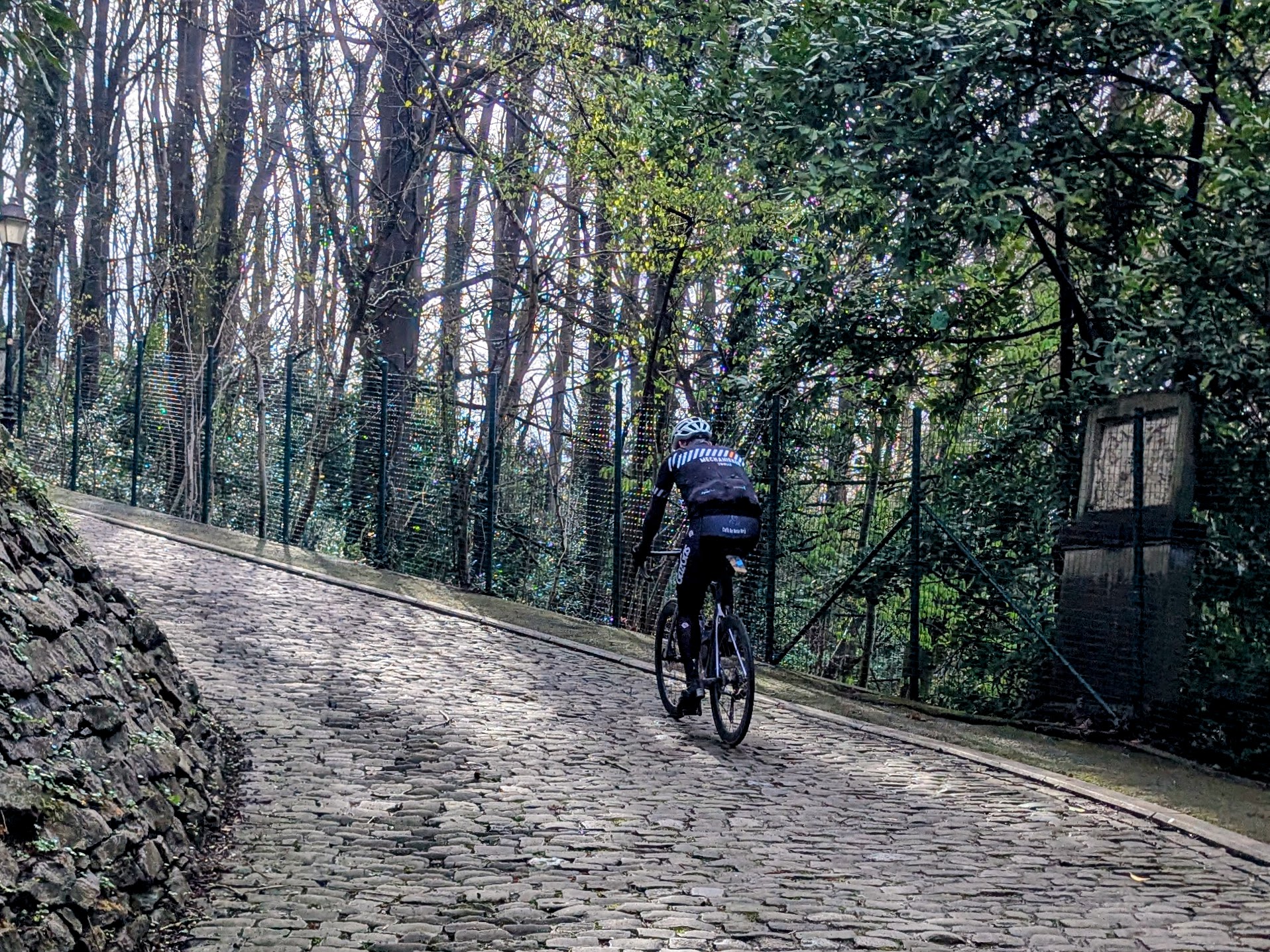
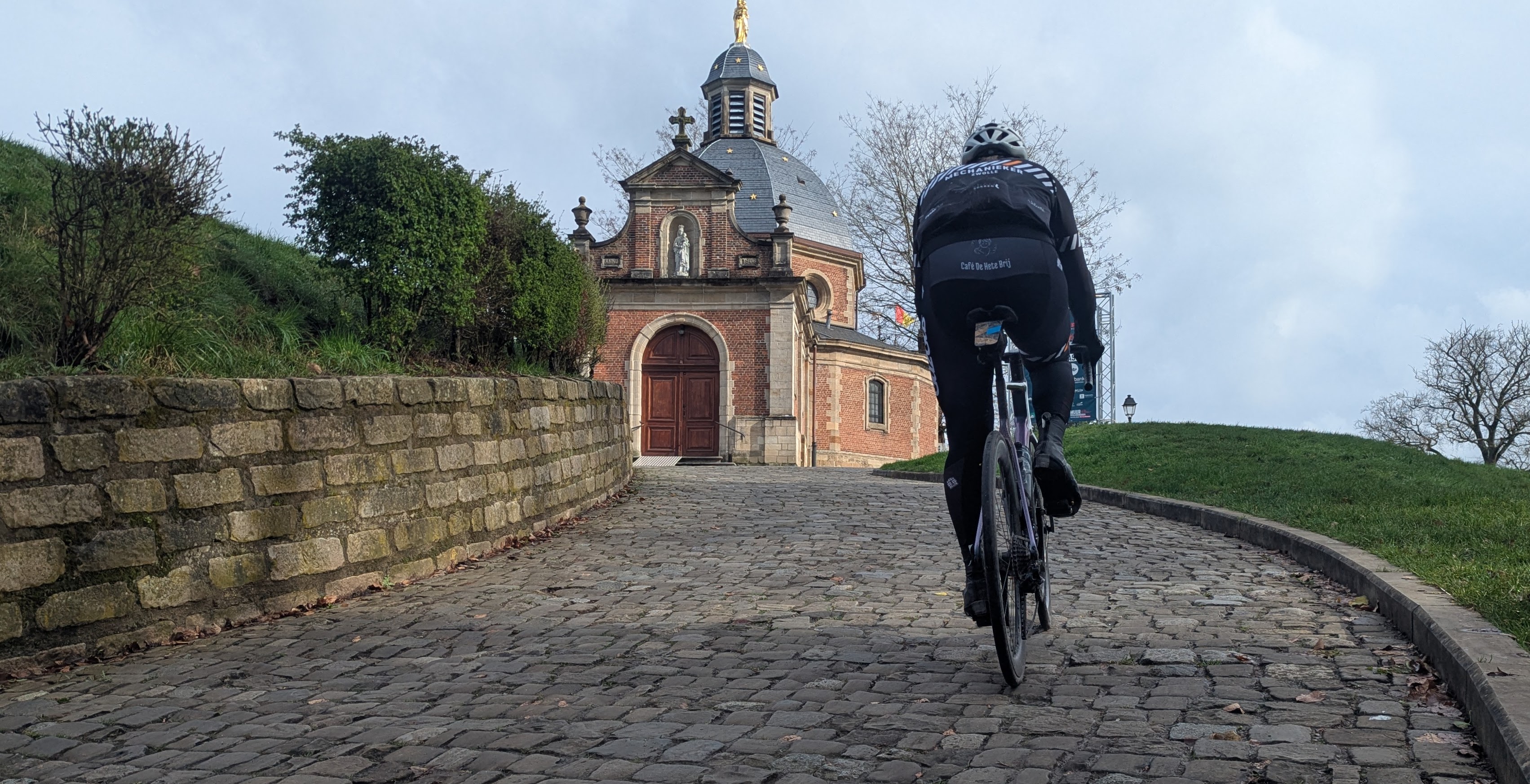
There's a brief section when leaving the city, before you enter the wooded area, where the climb eases off. Once you’re taking a hard right turn the steepest and most slippery part of the climb begins. We could ride the whole climb but it’s not uncommon for riders needing to walk the steepest section. There's no shame in walking the Muur. Even during the pro-races some riders have to walk.
Once you make a hard left turn you can see the restaurant, the hardest part is done and you can already focus on the final corner towards the iconic Kapel at the top. Anyone who's watched Flanders on TV will immediately recognise it.
Kanarieberg Revisited
From Geraardsbergen the route swung back west toward Ronse, picking up some lesser-known climbs before reaching the Kanarieberg. On the previous day we descended on this side and already said to each other this would be a tough climb.
The climb has a good road surface but with an average gradient of 8.5% it’s quite a challenge. At the start you can still pick up some speed from the small descent but then you’ll quickly hit the section with 10+%. After that the climb keeps going for a while till you hit the T-section in the Muziekbos..
On paper it looked like a straight line back to Oudenaarde. In reality, we still had to ride some cobbled sections and climbs we hadn't anticipated. The Ladeuze is a serious challenge when you can already see Oudenaarde in the distance and smell the coffee and lunch waiting for you.
Post-Ride: Flemish Stew and the Ronde Museum
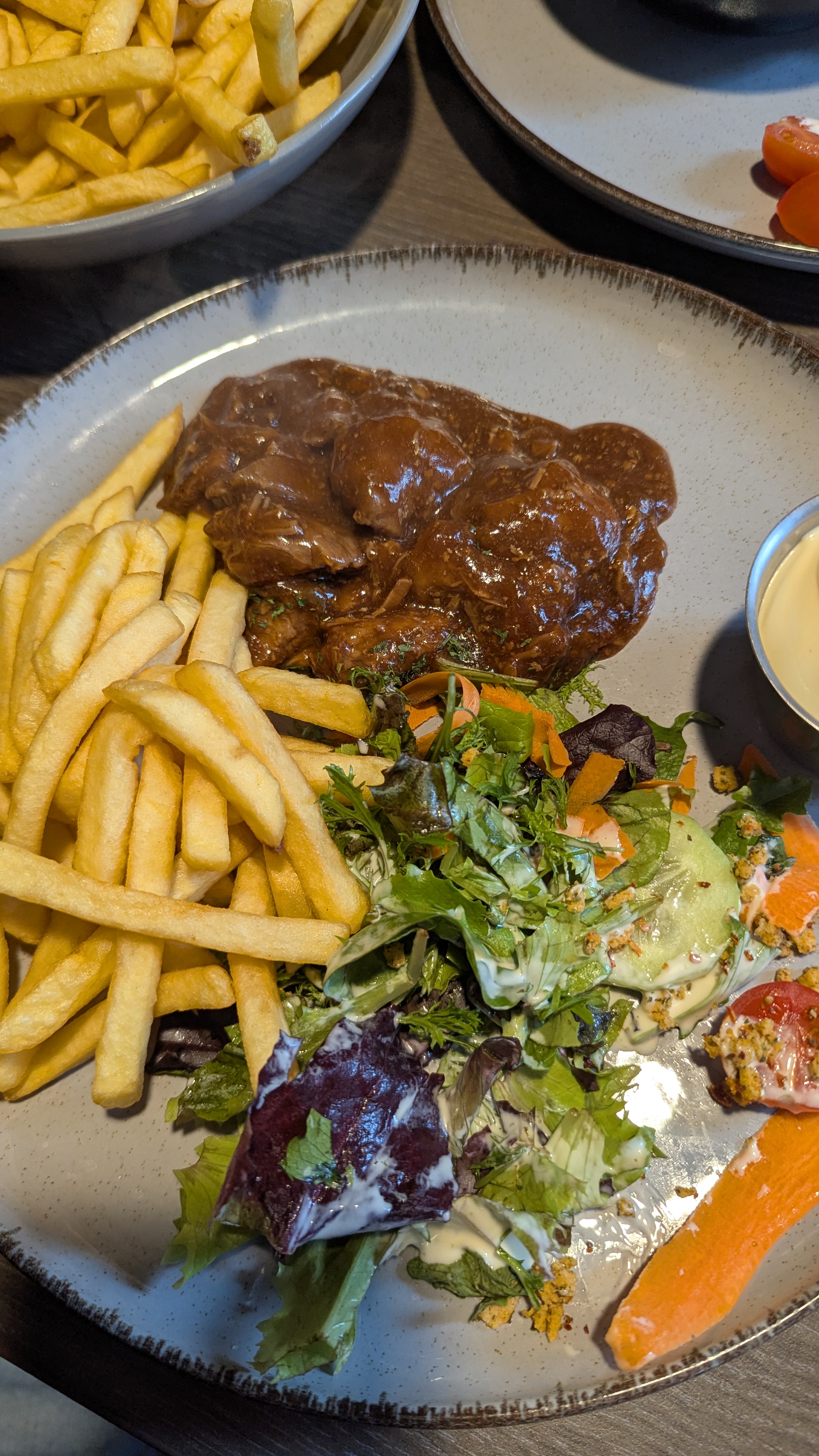
After a quick stop at the hotel we headed to one of the many restaurants on Oudenaarde's market square. I'd been thinking about stoofvlees met friet (Flemish stew with fries) since somewhere around kilometre 50. A must-eat if you're in Belgium and not vegetarian or vegan.
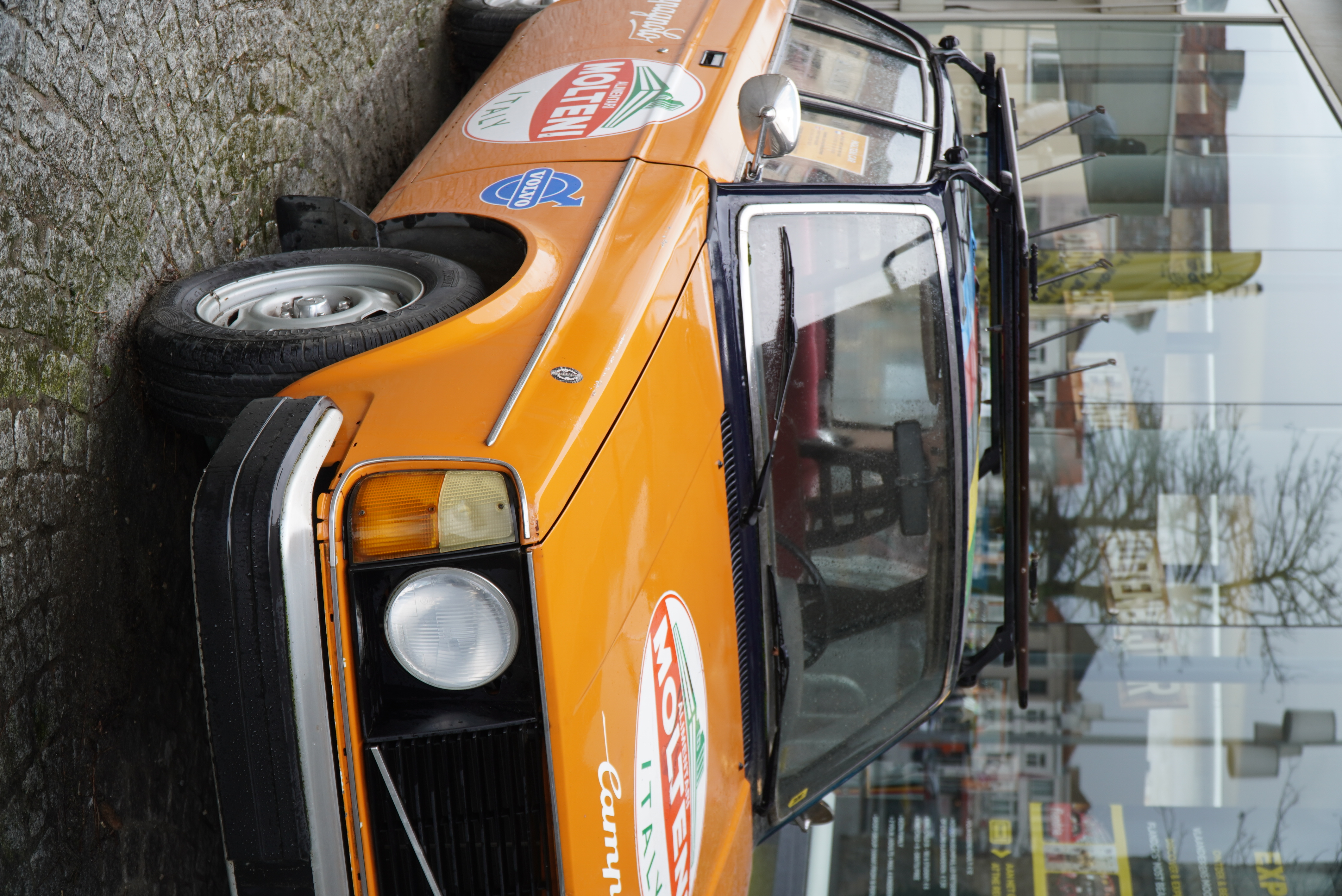
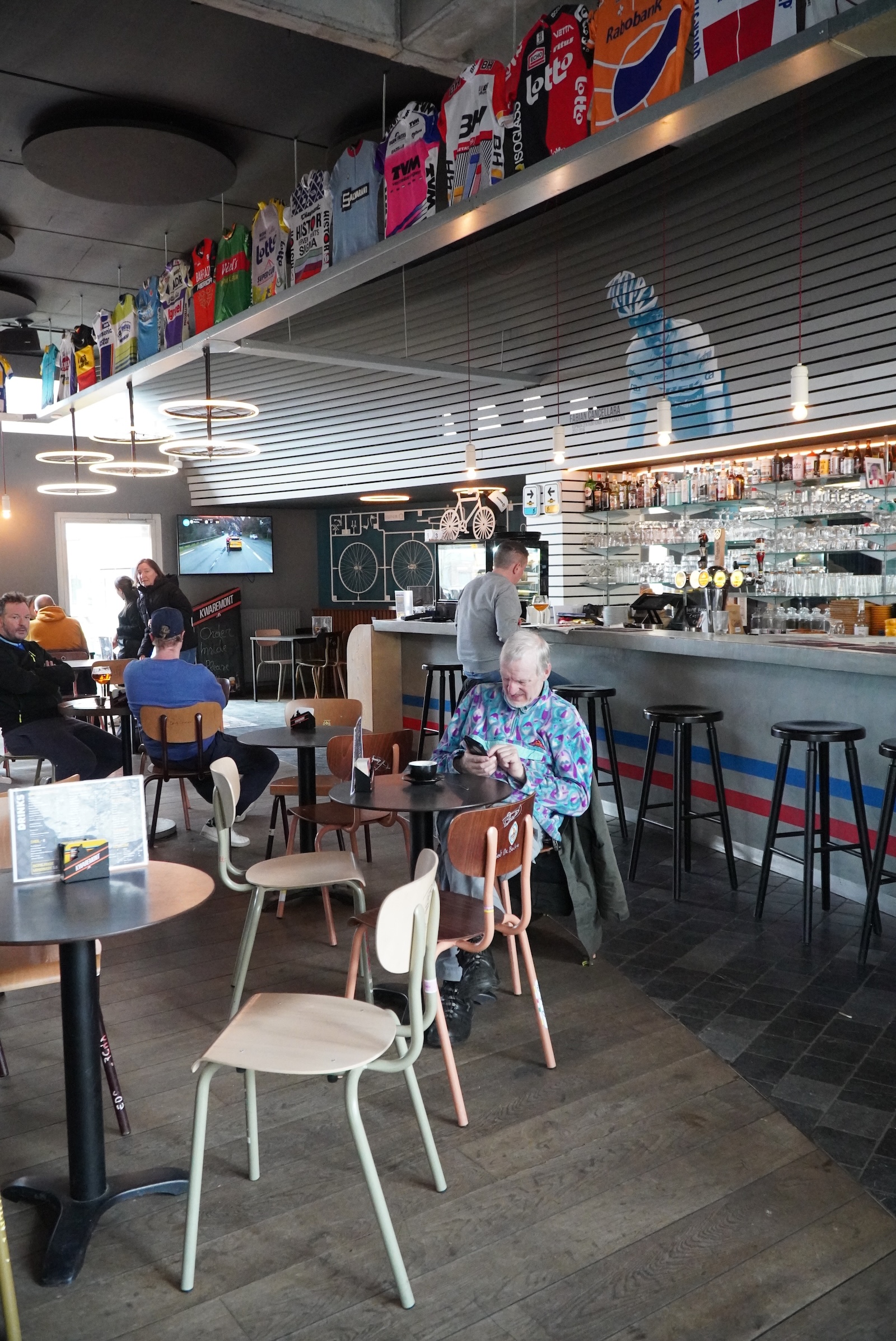
We finished the trip with a visit to the Ronde van Vlaanderen Centre (a cycling hub and museum dedicated to the iconic "Ronde van Vlaanderen" race). A fitting end to two days spent riding the same roads the pros race on every spring.
Is a Two-Day Flanders Trip Worth It?
Absolutely. Two days gave us two very different loops and a long list of climbs, cobbled roads and new spots. You don't need a full week to have a great Flanders experience.
A few things we learned:
- Check your cleats before you go. And maybe bring spares. Walking on cobbles will ruin them fast.
- Pick a hotel with bike storage. After a wet day in the Flemish Ardennes, a dedicated bike room makes a real difference.
- Bring an extra pair of cycling shoes or something to dry them quickly (a hotel hairdryer sometimes does the trick ..)
- Don’t let the distance fool you. The constant up and down takes a lot of energy. Plan your ride conservatively, especially with colder temperatures.
We left Flanders with renewed respect for the cobbles, the climbs and the area itself. And we’re already planning the next trip, ideally when it's sunny and the hedgerows are green.
Excited to plan your own trip? Check out our Flanders guide
The routes we did: