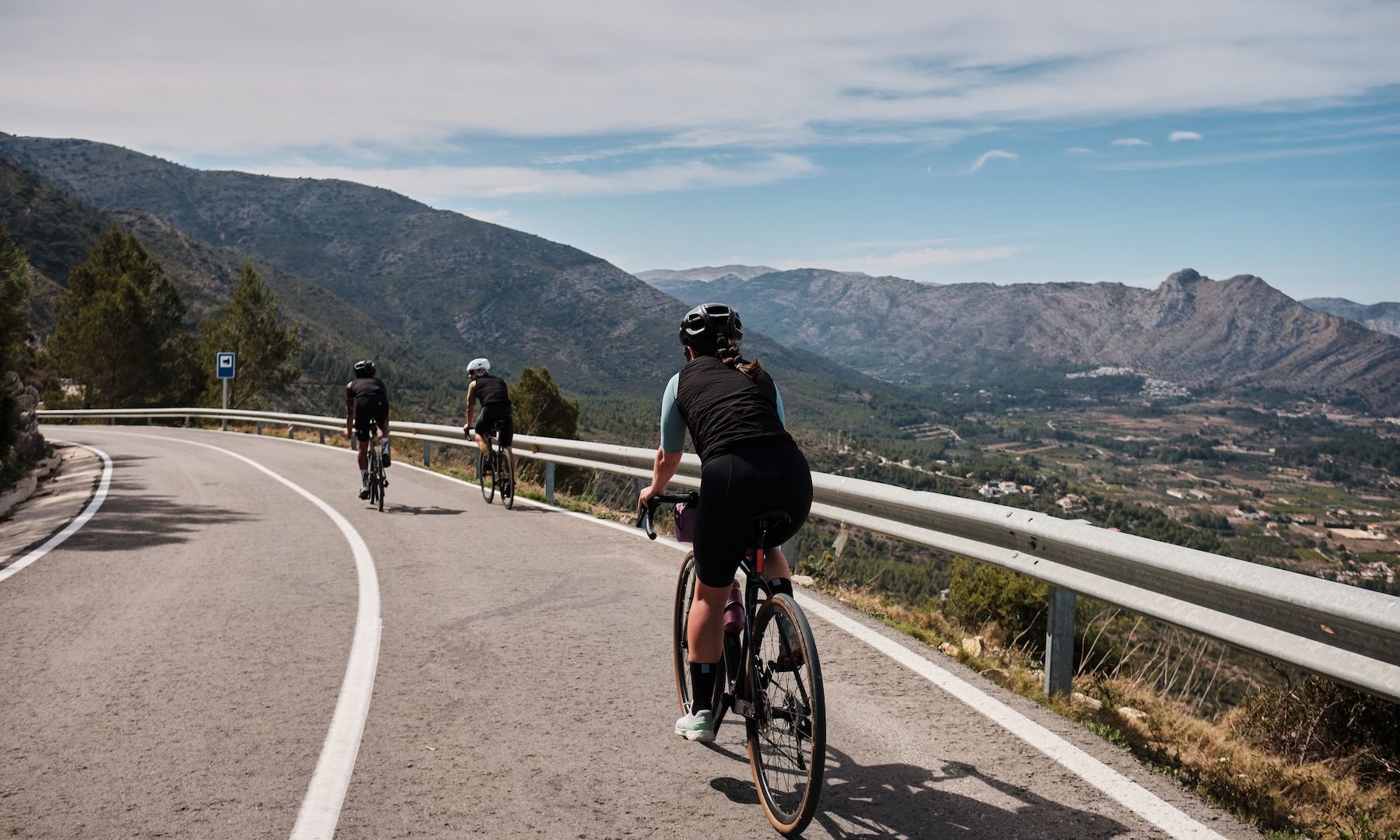
Choosing a road cycling holiday destination is where most people go wrong. They pick somewhere based on instagram or recommendations without thinking about whether it actually suits how they like to ride.
The result? Suffering through terrain that doesn't match your fitness. Or worse, getting bored because the riding doesn't challenge them enough.
Here's how to pick a destination that actually works for you.
Is it your first road cycling holiday or trip? If you're not sure yet whether you're a climber or a coffee-stop rider, that's completely normal. Start with something close to home or choose Mallorca or Girona. Both destinations offer enough variety that you can figure out what you enjoy as you go, and neither will punish you for not knowing your FTP.
Pick based on how much time you have
How long you have shapes the shortlist before anything else.
For a (long) weekend trip, stick to destinations reachable by car or train in under 3-5 hours. You can still ride on both days if you're not wasting half of Saturday stuck in traffic. Think nearby mountains or a quick drive across the border. Leaving on Friday evening can be a great way to get the most out of the trip without taking extra time off from work.
For trips of 4 days or more, it's worth the effort to travel a bit further. Flying or longer drives open up destinations that just aren't realistic over a weekend. The travel investment makes more sense when you're getting 4+ days of riding out of it.
If the trip is built around a family holiday, the riding has to fit around everyone else. That's not a bad thing. Many of the best cycling destinations are also great family destinations, and with a bit of planning you can squeeze in a few rides without disappearing for the entire trip.
Be Honest About What You Enjoy
This isn't about fitness bragging rights. It's about having a good time on the bike.
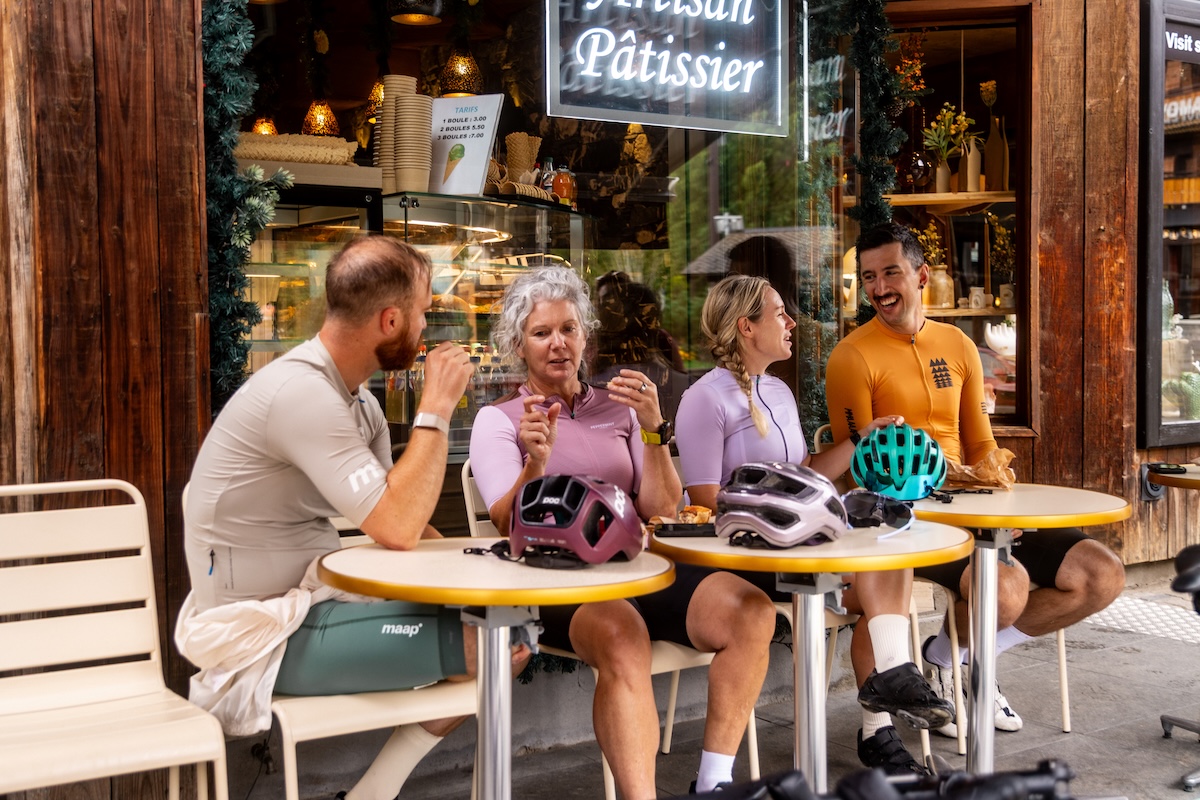
Some cyclists love grinding up mountain passes for hours. Others prefer rolling terrain with frequent cafe stops. Neither is better, they're just different.
Ask yourself:
- Do I enjoy long, sustained climbs or varied terrain?
- Do I want to push myself or keep things relaxed?
- How many hours per day do I actually want to ride?
- Is the coffee stop as important as the kilometers?
Your answers point you toward different destinations.
For Relaxed, Scenic Riding
If you're going for the experience rather than the training, some destinations deliver exactly that.
Mallorca offers beautiful loops through varied terrain. You can ride 60–80km with manageable elevation, stop for coffee with sea views, and still feel like you've had a proper day on the bike. You don't need to ride 150km with 3,000m of climbing unless you want to.
Tuscany has a similar vibe. Rolling roads through wine country, incredible food, interesting architecture and villages along the way. You can build your rides around long lunches and still cover plenty of ground.
Algarve is worth adding to this list. The roads along the coast are quiet and scenic, the weather is reliable from early spring through autumn, and the food scene is excellent. It's a natural fit if you want relaxed riding but with an Atlantic coastline rather than hilltop villages.
Girona sits in its own category. It's one of the most cycling-focused cities in Europe, and the terrain around it is genuinely versatile. You can do flat coffee shop loops from the city center, head into the pre-Pyrenees foothills for something more demanding, or take on the coastal roads toward the Costa Brava. It works for almost any riding style, which is why so many pros base themselves there.
These destinations let you enjoy cycling as part of a holiday rather than turning every day into an epic.
For Climbers and Col Hunters
If doing long climbs is what excites you, head to the mountains. Keep in mind that in these regions, even short rides quickly stack up elevation. There's no such thing as a flat day out.
Livigno - Stelvio and the Dolomites give you steep gradients and dramatic scenery, though the area can get busy with tourists in peak season.
The French Alps have the iconic cols you've seen on TV. Alpe d'Huez, Col du Galibier, Col de la Madeleine. Quiet roads, endless climbing, and that satisfying rhythm of grinding up a pass for an hour or more.
The Pyrenees span Spain, France and Andorra, with the Basque Country worth adding to the same trip. Fewer tourists than the Alps, dramatic scenery, and climbs that go on forever.
For Serious Training
Some trips are about building fitness rather than sightseeing, though each of these destinations has its own charm.
Tenerife, Gran Canaria and Lanzarote are the classic winter training destinations. The Canary Islands have essentially no flat roads. Every ride involves significant climbing, and you can access altitude without dealing with cold mountain weather. Serious athletes and professional teams train here for a reason.
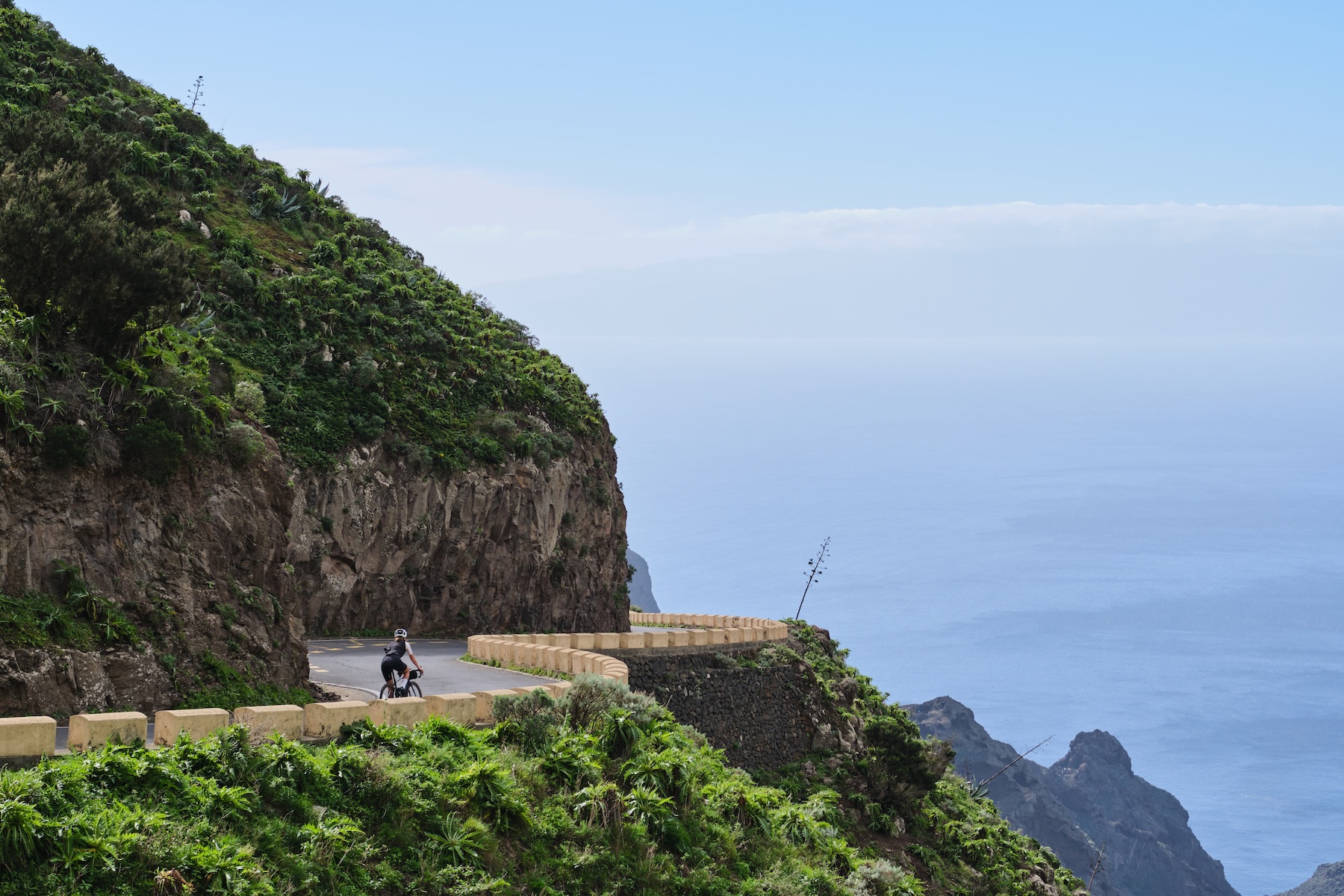
Calpe on the Costa Blanca is the other popular training base. It's not as dramatic as the Canaries, but the climbs are excellent, the weather from October through May is reliable, and the town has built up a strong cycling infrastructure around the influx of riders who come every winter. A good option if you want training-focused riding without the commitment of flying to an island.
Consider Cultural Immersion
What you can do when you’re not riding your bike matters too.
Think about rest days and bad weather. If it rains, what will you do? If your legs need a break, are there interesting places to visit?
Andalucia gives you options. A rainy day means you can visit Granada and the Alhambra, Malaga or any other historic town. The region has incredible food and plenty of cultural heritage. A rest day becomes an adventure rather than a boring day in your accomodation.
Tuscany or Algarve are similar. Wine, gastronomy, architecture. You can fill non-riding time easily.
Compare that to Calpe. The cycling is fantastic with big climbs, but there's not much else to do besides from relaxing by the pool or beach. If that's fine with you, great. Some people prefer pure focus on training without distractions.
Just know what you're getting into before you arrive.
Solo Trip or Group Ride?
It's worth thinking about who you're travelling with before you commit to a destination.
If everyone in the group rides at a similar level, most destinations work. But if you're travelling with friends of mixed ability, pick somewhere with terrain that can accommodate different paces. You don't want the stronger riders bored and the less experienced ones suffering on every climb.
Mallorca and Girona are the most flexible for mixed-ability groups. Both have easy flat or rolling routes and harder options within the same area, so different riders can choose their day independently and still meet for lunch.
Pure climbing destinations like the French Alps or the Canary Islands are harder to make work for mixed groups. If one person is there to train and another is looking for a relaxed week, you'll spend half the trip negotiating the plan.
Match Destination to Your Goals
Here's a quick framework:
| What You Want | Best Destinations |
| Relaxed riding, scenery, coffee stops | Mallorca, Tuscany, Algarve, Girona |
| Iconic climbs, col hunting |
French Alps |
| Winter training, building fitness | Tenerife, Gran Canaria, Lanzarote, Calpe - Costa Blanca, Malaga - Andalucia |
| Mix of riding and culture | Malaga - Andalucia, Tuscany, Algarve |
| Mixed-ability group | Mallorca, Girona |
| Weekend trip | Flanders, Ardennes, South Limburg, Vosges, Nationalpark Eifel, Taunus |
Or find your destination by filtering on month, terrain and country.
Don't Follow the Hype
Instagram makes any destionation look incredible. Travel blogs rank destinations by popularity, not by how well they suit cyclists.
Pick somewhere that matches your riding style, your fitness level, and your idea of a good time. Be honest with yourself and you'll have a much better trip.
Be honest with yourself and you'll have a much better trip.
Related posts:
Best Time to Visit Europe's Top Road Cycling Destinations
How to Choose Where to Stay on a Road Cycling Holiday