
- 1. The Ride Atlas: Best for finding human-curated routes in a specific destination
- 2. Komoot: Best for algorithmic route discovery and planning
- 3. Ride with GPS: Best for building and editing your own routes
- 4. Strava: Best for route ideas based on where everyone actually rides
- 5. AllTrails: Best for off-road, trails, and mixed-surface riding
- At a glance
- So which should you use?
There is no shortage of cycling apps. There is, however, a real shortage of clarity about which one actually helps you get out on the road. Finding a route means very different things depending on the rider.
For some, it means building a route from scratch. You drop a start and finish point, drag the line around, and export the GPX file. For others, it means pure discovery. If you are heading to Girona for a week, you just want to know where the best tarmac is.
Most cycling app lists put these two jobs together and rank everything based on the route builder. We split them apart so each tool gets judged on what it actually does best.
Full disclosure: The Ride Atlas is our platform, and it appears on this list. We are honest about where it wins and where you are better off using something else. A rigged comparison is easy to spot anyway.
1. The Ride Atlas: Best for finding human-curated routes in a specific destination
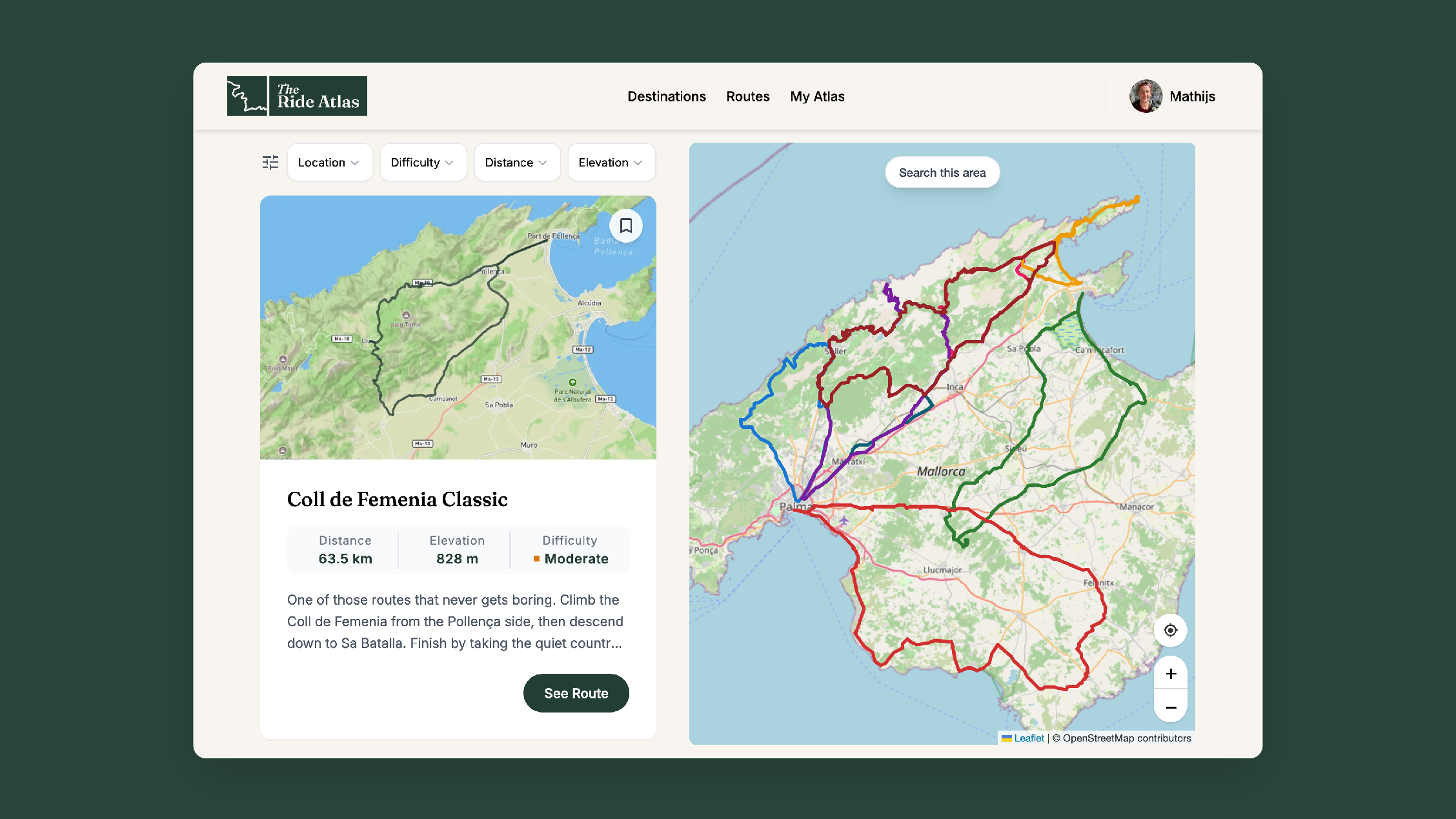
Route creation: Human curated routes · Best for: Destination and trip planning
If you are travelling somewhere to ride and want to know the best routes before you go, this is the gap The Ride Atlas fills. It is not a custom route planner, and it does not try to be one.
Instead, it is a library of destination guides built around human-curated routes, covering premier European regions like Mallorca, Girona, and the Dolomites, alongside lesser-known gems like the Black Forest and the Vosges.
Each guide includes the routes worth your limited holiday days, with details on the climbs that matter, elevation profiles, and clear difficulty classifications. You can search routes by a base town or by the accommodation you are staying in, then filter by difficulty, distance, and elevation to plan out your week.
What it is best at: Cutting your holiday research from days of forum-trawling down to a single afternoon, with the confidence that a human chose every route in the guide.
Where it falls short: It will not plot a custom route from your front door, and coverage is destination-by-destination rather than worldwide.
Pricing: One-time purchase, no subscription. Get lifetime access to every current and future guide for €29,95 / £28,95 / $34,95.
2. Komoot: Best for algorithmic route discovery and planning
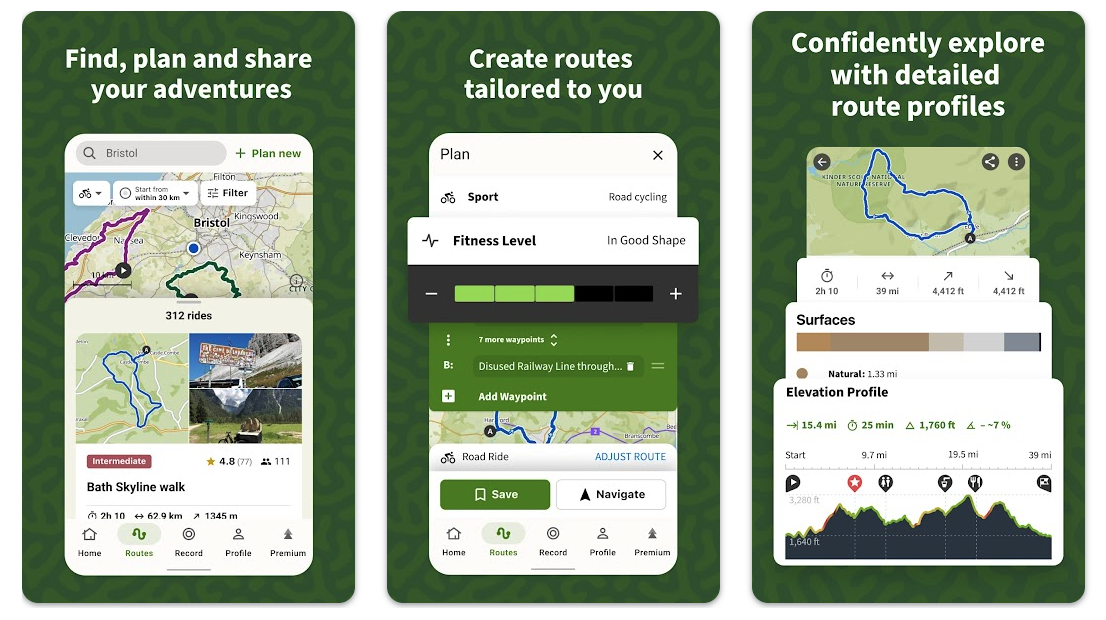
Route creation: Algorithmic · Best for: Generating and tweaking your own routes
Komoot is one of the most capable route planners available today. Tell it where you are and it generates a sensible route from its own surface data, and the community highlights and photo-led discovery tools are genuinely helpful across Western Europe.
The platform shows a mix of auto-generated and user-uploaded routes, so it is worth checking the full route detail before you roll out. The algorithm sometimes takes tight shortcuts or odd detours that a road cyclist would usually avoid.
What it is best at: Exploratory planning when you want to see what is rideable nearby, with strong Western Europe coverage and an excellent mobile app.
Where it falls short: Route quality leans heavily on the software, and the algorithm will occasionally send you down a road no local would choose (getting "komooted")
Pricing: A free account includes one region to download gpx files in. Premium is €59.99 / £59.99 / $59.99 per year (around €6.99 / £4.99 / $4.99 per month). Note: the new owner of komoot is experimenting a lot with pricing so the prices can differ per person.
3. Ride with GPS: Best for building and editing your own routes

Route creation: Manual and algorithmic · Best for: Creating and tweaking routes
If you want to draft routes with absolute precision, Ride with GPS is the strongest pure planning tool on the market. It has smart drag-and-drop anchor points, clean heatmaps, and tidy tools for organising your ride library.
It focuses less on discovering a great ride and more on engineering the exact ride you want. The free Starter tier covers basic planning and recording; the advanced tools sit behind a paid subscription.
What it is best at: Detailed, repeatable route building and group-event logistics. It syncs flawlessly with almost every GPS computer.
Where it falls short: There is very little editorial curation. The app tells you a road exists, but not whether the ride is scenic or enjoyable.
Pricing: Free Starter plan. Basic is $9.99 per month or $59.99 per year. Premium is $12.99 per month or $79.99 per year. Ride with GPS bills in US dollars, so European riders pay the local equivalent.
4. Strava: Best for route ideas based on where everyone actually rides

Route creation: Algorithmic · Best for: Heatmaps and finding popular roads
Strava offers a powerful route planner on desktop and is investing heavily in its mobile planner. It can generate a few route options from any location. The interface is clean, but the logic is fully algorithmic and route discovery can feel cumbersome at times.
The heatmap is probably the best on the market, with rich data on where cyclists actually ride worldwide. You can also use segments to see the roads local riders favour.
The catch is that route creation and recommendations now sit behind a paywall. Strava has steadily trimmed the free tier down to basic tracking and social features.
What it is best at: Using millions of data points to surface popular roads, with the best global heatmaps available.
Where it falls short: Popular does not always mean good for road cycling. Busy commuter roads light up just as brightly as quiet country lanes, and route discovery is slow.
Pricing: Free tier for tracking. Premium is $11.99 per month or $79.99 per year in the US, and £8.99 per month or £54.99 per year in the UK. Eurozone riders pay €10.99 per month or about €69.99 per year.
5. AllTrails: Best for off-road, trails, and mixed-surface riding
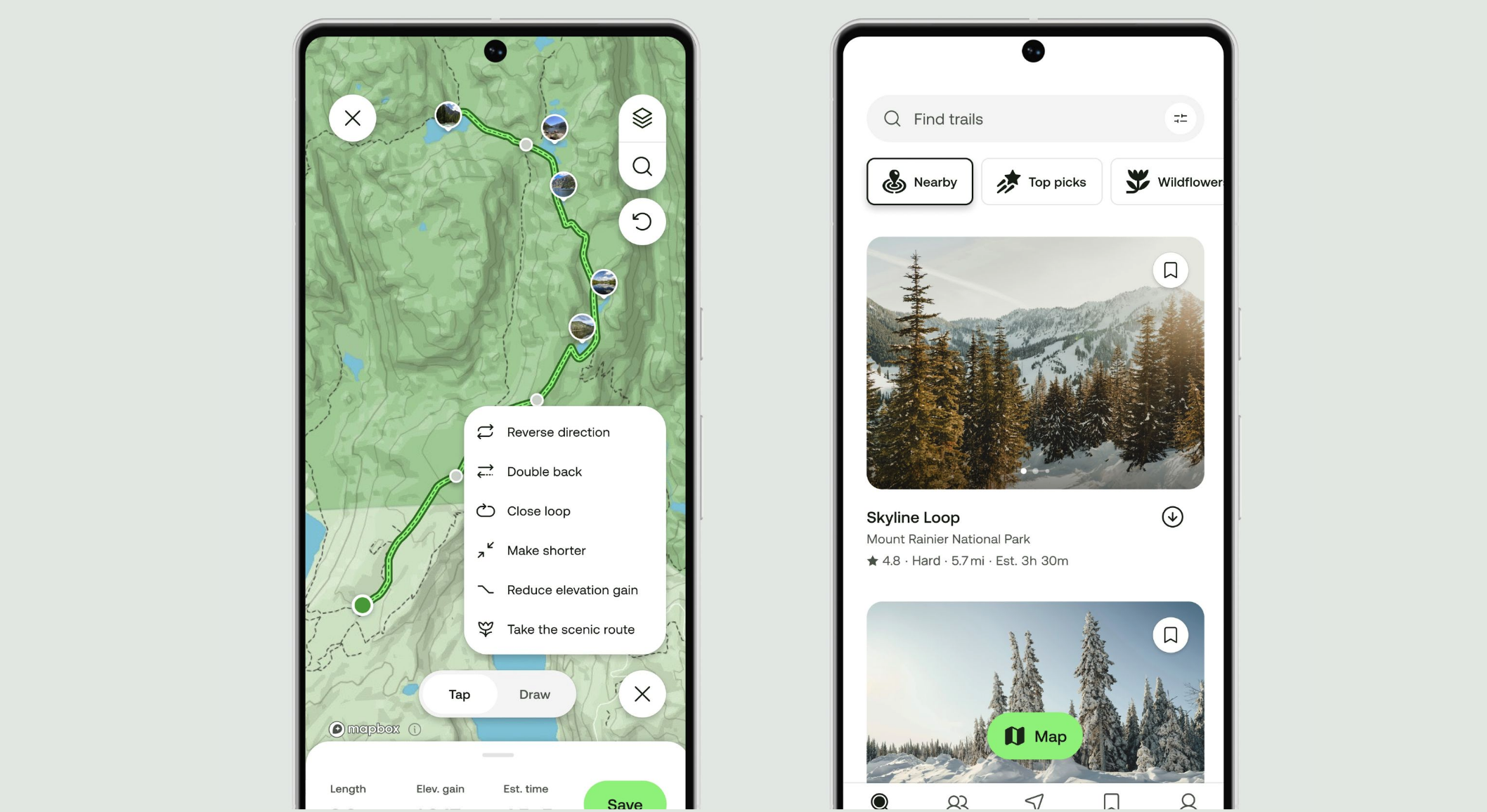
Route creation: Crowdsourced · Best for: Trails, rail trails, and casual mixed-surface riding
AllTrails is an enormous platform with a vast library of trails and detailed user reviews. It is hiking-first by design, though, and the cycling content leans heavily toward car-free rail trails, shared paths, and mountain bike tracks.They are particularly strong on the American content and the UK.
For pure road cycling, this is the weakest fit on the list. It works if your road ride involves a paved greenway, but it is not the tool for hunting down alpine tarmac and big climbs.
What it is best at: Discovering traffic-free paths with plenty of real-time user feedback.
Where it falls short: It is not built for skinny tyres. You will spend time filtering out content meant for hikers.
Pricing: Free Base tier. Plus is $35.99 per year and Peak is $79.99 per year, billed regionally so UK and EU riders pay the local equivalent.
At a glance
| Tool | Route creation | Best for | Road-cycling fit | Plans your own route? |
|---|---|---|---|---|
| The Ride Atlas | Human-curated | Destination & trip planning | High | No |
| Komoot | Algorithmic, Crowdsourced, and route planner | Generating & tweaking routes | High | Yes |
| Ride with GPS | Crowdsourced and route planner | Precise route building | High | Yes |
| Strava | Algorithmic and route planner | Riding popular local roads | High | Yes |
| AllTrails | Crowdsourced and route planner | Trails & mixed-surface | Low | Yes |
So which should you use?
Your choice comes down to what you need to solve:
- Where should I ride on my trip? Start with a curated destination guide on The Ride Atlas.
- I want to design my own route. Use Ride with GPS for precision, or Komoot for an algorithmic starting point to tweak.
- Where do the locals actually ride here? Open up the Strava segments and look for the local heroes. Combine it with the heatmaps
- My ride includes trails, greenways, or gravel. Check AllTrails or Komoot
Most serious riders end up using two apps: one tool to decide where the good riding is, and another to handle the navigation. The trick is knowing which is which, and not paying for a route-planner subscription hoping it will tell you where the rides worth doing actually are.