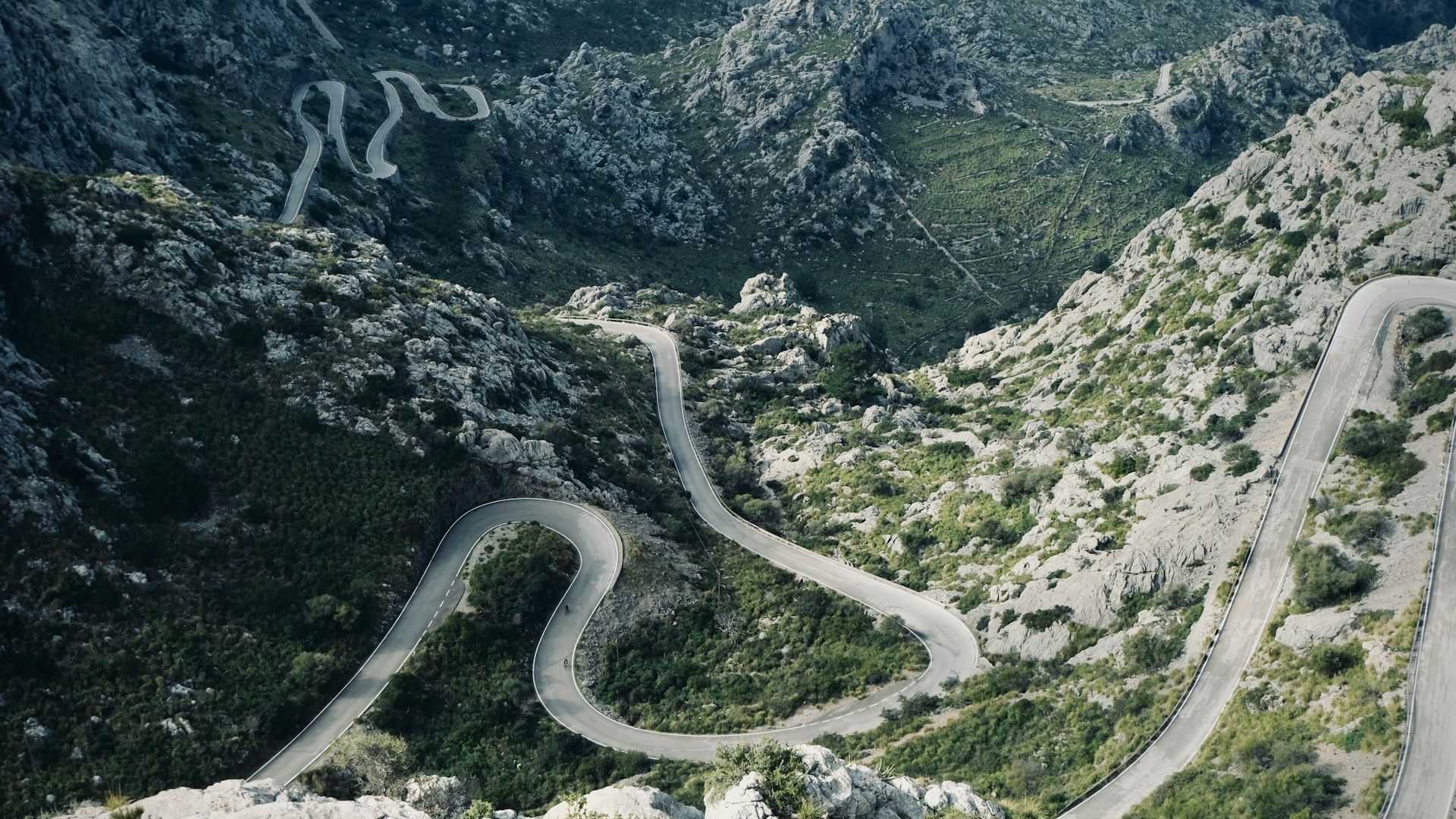
The first time you see Sa Calobra from above, it doesn't look real. A thin ribbon of asphalt twists down through the cliffs, folding back on itself again and again until it disappears into a tiny cove far below. Then you realize you have to ride it all the way back up.
This is Sa Calobra, officially known as the Coll dels Reis. It's a road that exists purely for its own sake. There's nothing practical about it. It's definitely one of the most memorable road cycling experiences you'll ever have.
Why Cyclists Love Sa Calobra
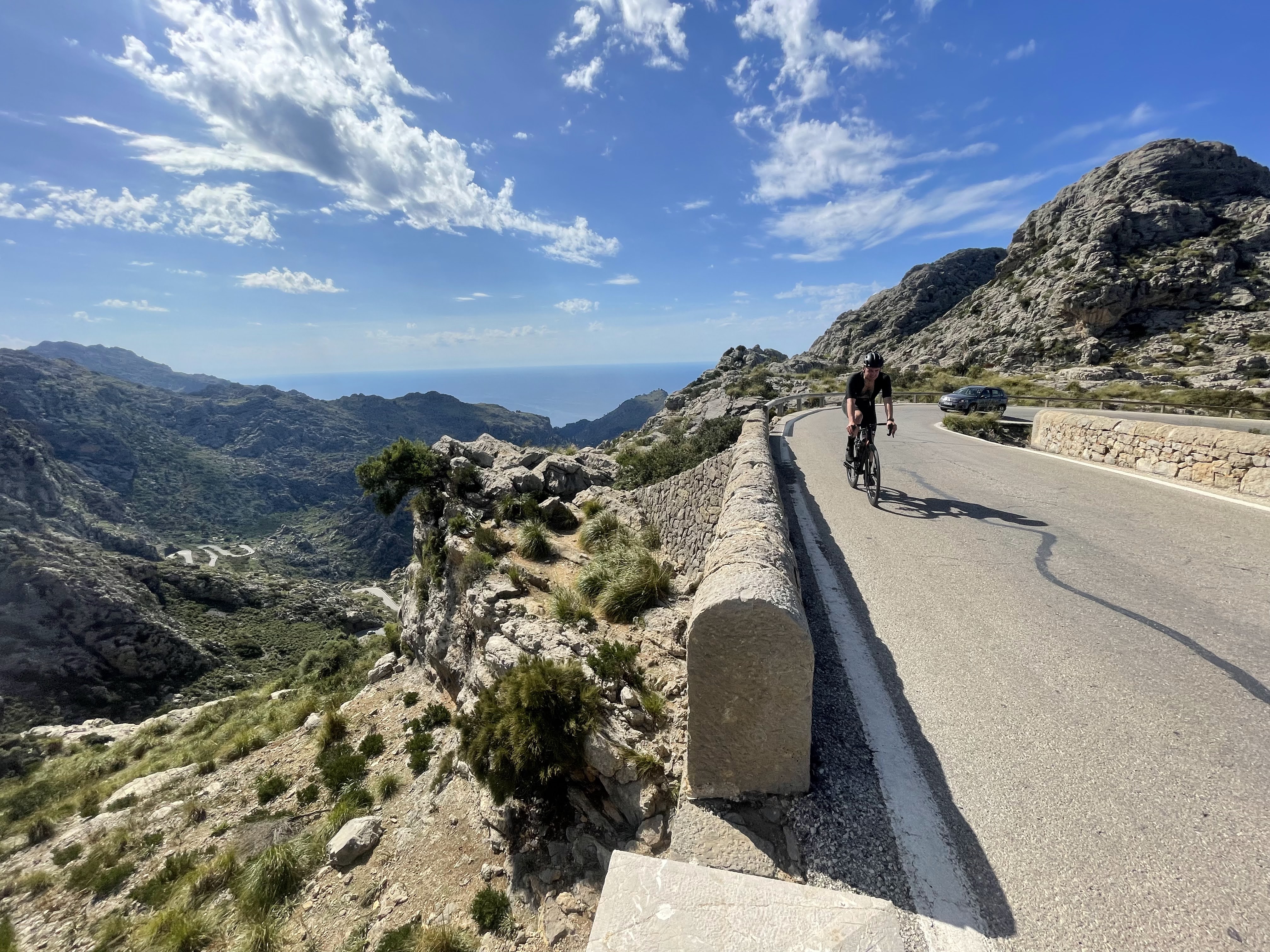
Sa Calobra wasn't built for road cyclists. Engineers carved it into the limestone cliffs of Mallorca's Serra de Tramuntana in the 1930s to connect a remote beach to the rest of the island. But somewhere along the way it became a cycling destination.
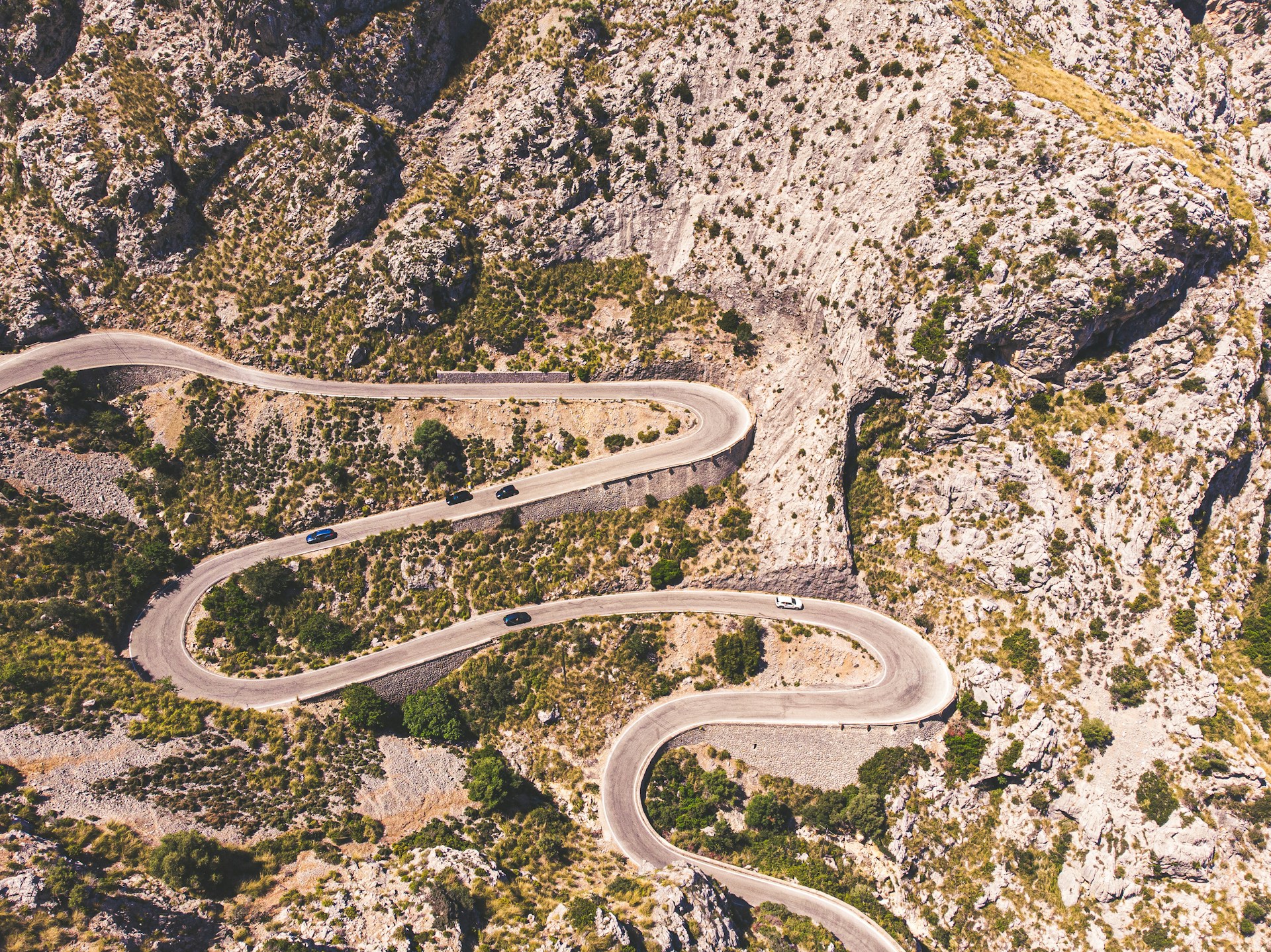
The road has 26 hairpin bends, including the famous "tie knot" where the road loops under itself. Every turn opens up a new view of the mountains or the sea. The engineering of the road alone is worth the trip.
What makes it special is the combination of challenge and reward. The climb is demanding but not brutal. The scenery is constantly changing. And at the bottom, you can dip your feet in the Mediterranean before turning around and climbing all the way up.
The Ride Itself
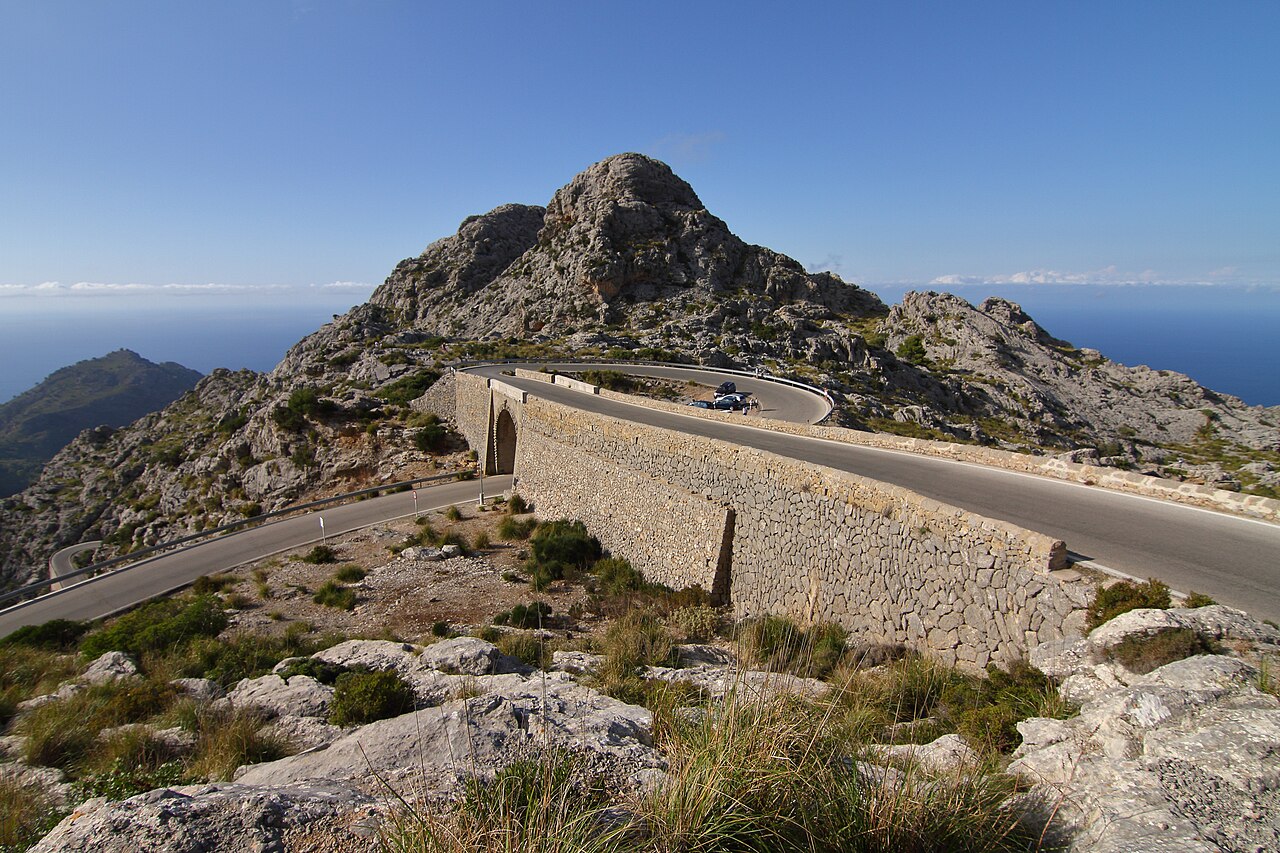
You start from the Ma-10 road near the Acueducto de Escorca and Bar Els Arcs. First you need to climb roughly 160 meters / 525 ft. on the south side of Coll de Reis before you descend down to Port de Sa Calobra. Once you commit to going down the only way out is back up.
Take it easy on the descent, it can be tricky and slippery in some parts especially in the morning when wet or damp.
The road drops steeply through the first hairpins, with views across the Tramuntana range. Halfway, you pass through a short tunnel before the gradient kicks up again. The "tie knot" section comes near the end, where you literally ride in a 270-degree spiral under the road you just traveled.
At the bottom sits the Cala de Sa Calobra, a small cove with a beach, a couple of restaurants, and usually a (large) crowd of day-trippers who arrive by boat or bus. This is your turnaround point.
The climb back up is where Sa Calobra earns its reputation. The gradients are steady, but the constant turning and the Mediterranean sun can make it feel harder than the numbers suggest.
View the full climb profile with interactive map, gradients and stats→
When to Ride Sa Calobra
Timing matters here. The best months are April, May, September, and October when temperatures are comfortable and the roads are quieter.
Summer brings more tourists to the island and more buses on the road. Lots of them. The narrow road wasn't designed for the traffic it now carries, and sharing hairpin bends with large buses isn't much fun. If you ride in July or August, leave early to have the road almost to yourself.
Winter is mild in Mallorca, which is why pro teams train here in January and February. You might encounter some rain, but the island rarely gets truly cold.
Start early regardless of the season. The climb faces south and heats up fast once the sun clears the mountains.
Routes including Sa Calobra
Sa Calobra sits on Mallorca's northwest coast, about 35 kilometers from Sóller and 55 kilometers from Palma. It might be one of the most remote parts of the island and regardless where your hotel is it will be a big day out.
From the most popular cycling bases you can reach the climb. Here are our favourite routes from:
- Port d'Alcúdia / Pollença route to Sa Calobra
- Por de Sóller to Sa Calobra and back
- Route from Palma including Col de Sóller and Puig Major
You can ride to Sa Calobra from any of these. Many riders combine Sa Calobra with other Tramuntana climbs like the Puig Major, Col de Sóller, Coll de sa Batalla and Coll de Femenia.
What to Know Before You Go
A few practical notes:
- Bring enough water and make sure to have full bottles before you start the climb.
- Check your brakes before the descent, especially on a rental bike. The hairpins are tight and the gradients are real.
- Carry a light layer. The descents will chill you after a hard climb.
- Don't skip the beach. Take a couple of minutes at the bottom to relax.
The road surface on the climb is okay, though some sections show wear from the bus traffic. Mallorca maintains its cycling infrastructure well, and Sa Calobra gets plenty of attention.
Worth the Hype?
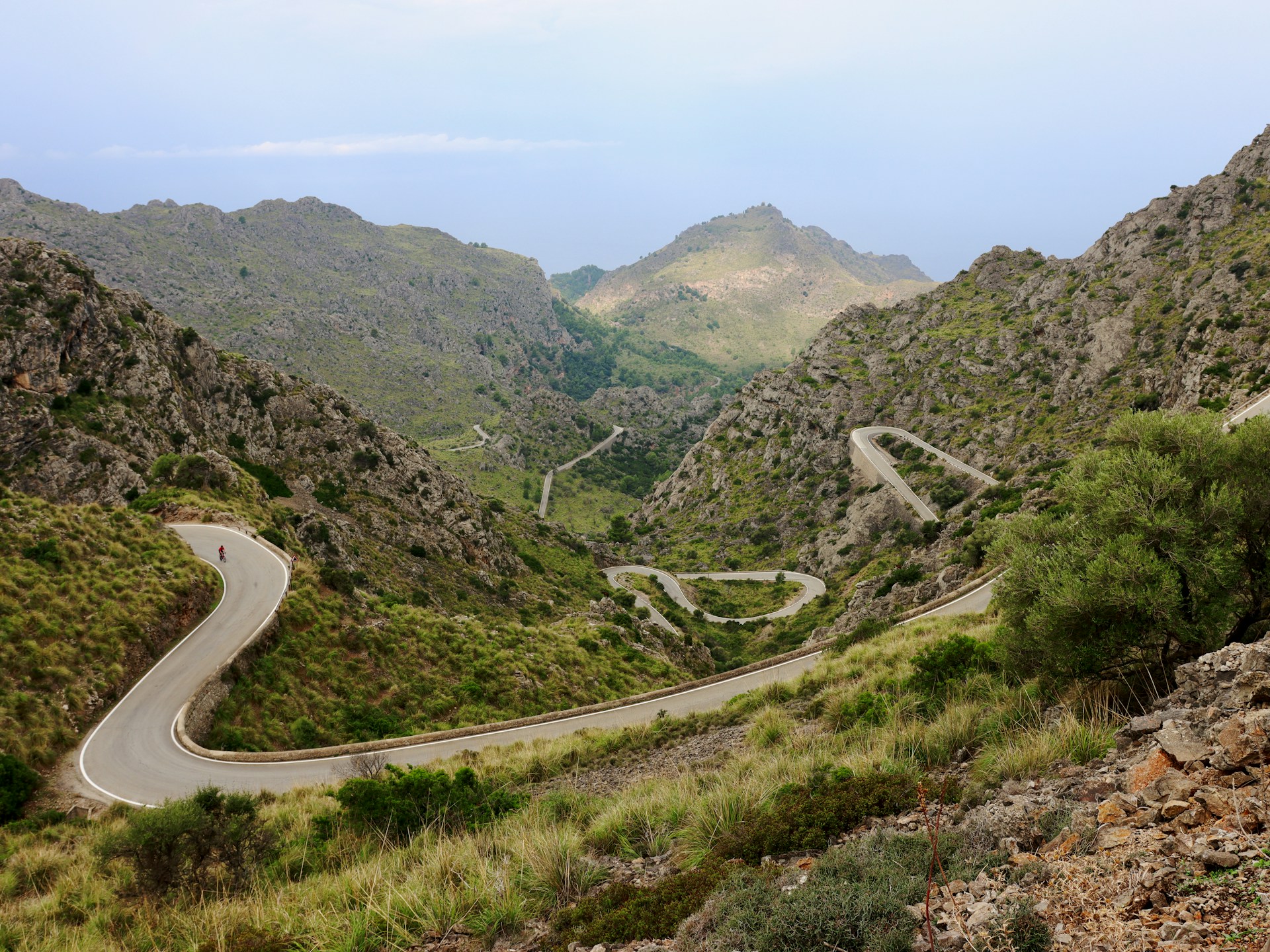
Some famous cycling climbs disappoint in person, Sa Calobra doesn't. The combination of dramatic scenery, interesting road design, and a genuine physical challenge makes it one of Europe's must-ride routes.
It's not the hardest climb on Mallorca. The Puig Major is longer and the gradients on Formentor are steeper in places. But Sa Calobra has something none of them can match: that feeling of riding a road that shouldn't exist, to a place that feels completely cut off from the world.
Then you climb back out and remember why you love cycling.
Mallorca cycling Guide
Our complete Mallorca guide covers the best routes, climbs, bike rentals, café stops, and where to stay.