You've picked the destination and the dates, booked your accomodation, sorted the bike and planned the routes. Now you pack your bag.
Road cycling holidays require a lot of specific gear and clothing that you might not find at your destination. That Di2 charger or specific tube size can be impossible to find in a quiet mountain village.
Copy this list, check off these essentials, and head out on your next road cycling adventure with total confidence.
The Non-Negotiables: Tools and Spares
- Puncture repair: at least 2 spare inner tubes, tire levers, CO2 cartridges with an inflator (or a mini pump or electric pump), and a tubeless repair kit if you run tubeless.
- Tools and parts: a multi-tool with Allen keys, screwdriver and chain tool, chain quick links that match your drivetrain, a spare derailleur hanger for your specific frame, and a small bottle of chain lube.
- Bike bags: a saddle bag, plus a handlebar or frame bag for things you need mid-ride.
Electronics and Navigation
- Bike computer loaded with your planned routes
- Smartphone with offline maps downloaded and a roaming plan active
- Front and rear lights
- Chargers for your bike computer, phone and lights
- Di2 or eTap charger if you run electronic shifting
- Optional: a high-capacity power bank for very long days
Cycling Kit and Weather Layers
- Short sleeve jerseys (1 per 2–3 days of riding)
- Bib shorts (1 per 2-3 days, washed in between)
- Base layers
- Gilet/vest for fast descents and colder temperatures
- Packable lightweight rain jacket
- Arm warmers, knee warmers, or leg warmers
- Lightweight cycling gloves
Cold Weather and High-Altitude Gear
- Long-sleeve jersey or thermal mid-layer
- Thermal bib tights or thick leg warmers
- Toe covers or full overshoes
- Under-helmet headband or cap
- Neck warmer or buff
- Insulated winter gloves
The Altitude Weather Trap: Mountain coastal forecasts can trick even experienced road cycling enthusiasts. If you ride in places like Tenerife or Gran Canaria, sea level might sit at a warm 25°C while the 3,000-meter summit sits at 8°C with freezing winds.
Always check the forecast for your highest elevation point rather than the valley base.
Nutrition and Hydration
- 1-2 water bottles
- 2 bottle cages on your bike (confirm this with the shop if you rent)
- Energy gels and bars you've already tested on long rides
- Electrolyte tablets or hydration powder
Comfort and Protection
- Chamois cream for multi-day saddle comfort
- High-SPF, sweat-resistant sunscreen
- SPF lip balm
- Cycling sunglasses, ideally with a clear lens for tunnels and cloudy days
- Your own helmet
If You're Bringing Your Own Bike
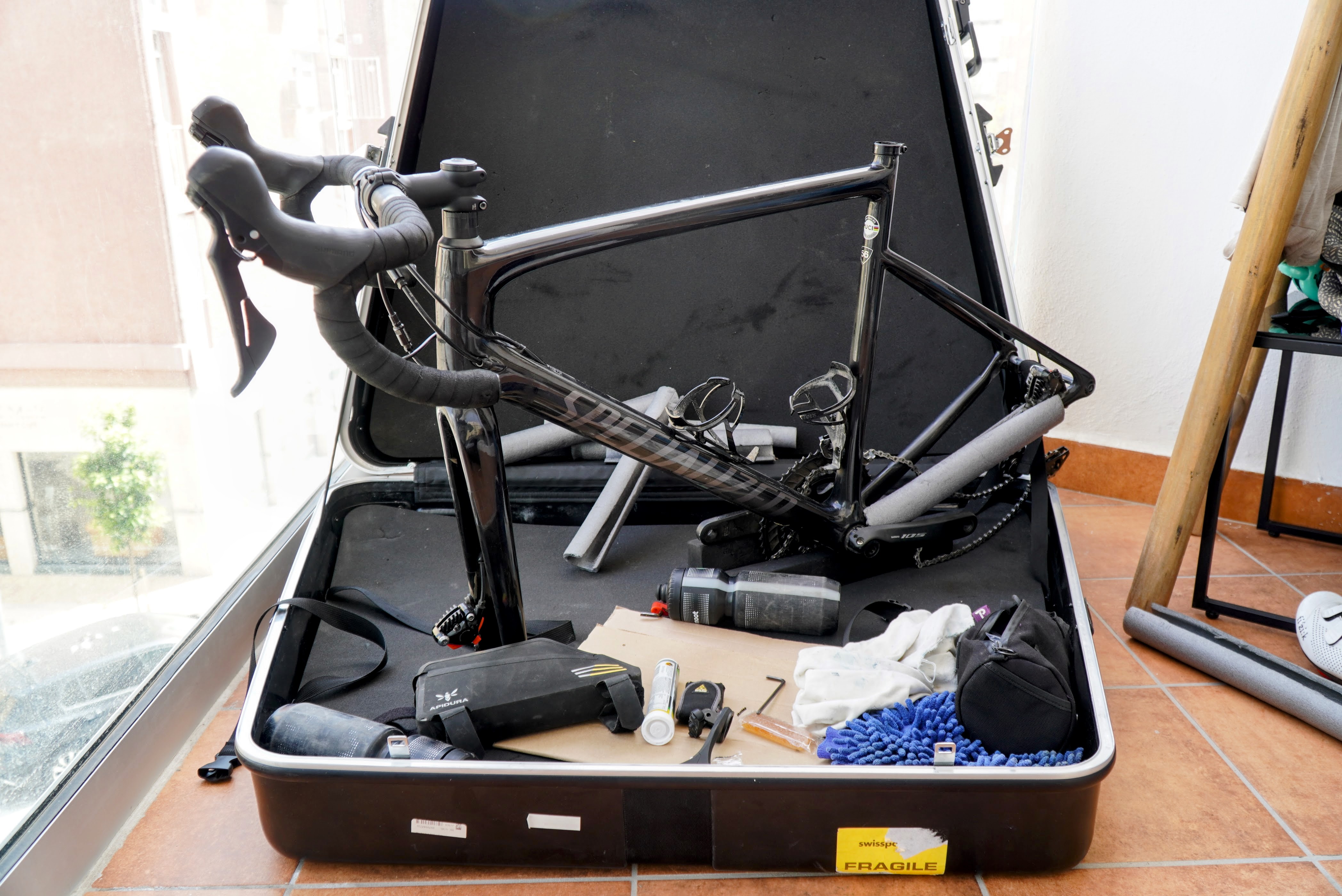
- Bike box or padded bike bag
- Pedal wrench (if your pedals need one)
- Torque wrench for safe reassembly
- Spare brake pads
- Frame padding or foam tubing
- Zip ties for securing loose parts
Still deciding whether to pack your own setup or leave it at home? Read our complete breakdown on whether to bring your bike or rent on your next trip.
If You Are Renting
- Your own pedals
- Your own saddle
- Bike computer and handlebar mount
- Saddle bag and handlebar or frame bag
Off-Bike Essentials
- Comfortable walking shoes and casual evening clothes
- Swimwear for the pool after a ride
- Toiletries, personal medication and travel-size laundry soap
- Travel insurance documents that specifically cover cycling accidents
- Copies of your passport and other travel documents
Once you zip up your bags, take a deep breath knowing you are completely prepared for whatever the road throws at you. Run through these five final sanity checks before heading to the airport or loading up the car, and enjoy every kilometer of your trip.
Final Checks Before You Leave
- Charge your bike computer, lights, electronic shifting and power banks.
- Test shifting, brakes and tire pressure on a short ride.
- Download every route file and offline map.
- Email yourself copies of your ID and insurance documents.
- Check the summit forecasts one last time and adjust your layers.